Annual chrysanthemum (Leucanthemum coronopifolium)
Care, watering, light and tips for Annual chrysanthemum on Floravia.
Quick facts
- Family: Asteraceae
- Difficulty: Easy to care for
- Watering: every 5 days
- Light: Full sun
- Temperature: 0–35 °C
- Toxicity: Toxic to pets
About Annual chrysanthemum
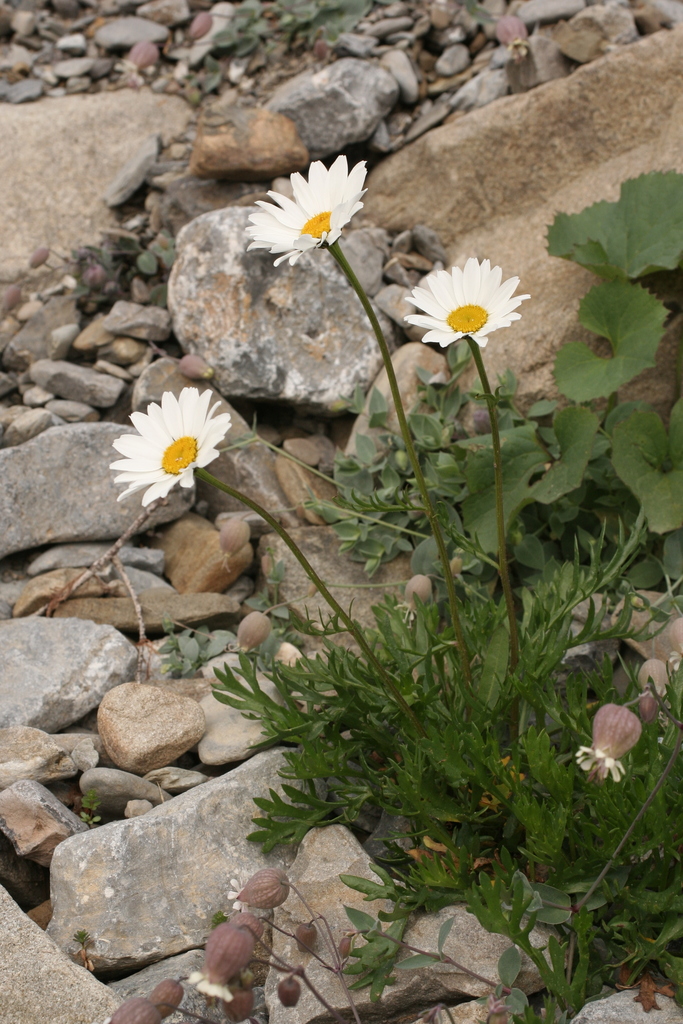
Leucanthemum coronopifolium, also known as the Coronopus-leaved Daisy, is a perennial herbaceous plant belonging to the Asteraceae family. It is characterized by its bright white flowers with yellow centers, very similar to common daisies, and its finely divided foliage which gives it a delicate appearance. It is ideal for flower beds, rock gardens, and borders, adding a rustic and luminous touch.
Native range
Mediterranean region
Care tips
This daisy prefers full sun exposure for abundant flowering, although it tolerates some partial shade. Watering should be moderate, allowing the substrate to dry out slightly between waterings, and it's crucial to avoid waterlogging. It thrives in well-drained soils, preferably slightly sandy. A common mistake is overwatering, which can lead to root rot.
How to save a dying Annual chrysanthemum
- Warning signs
- Yellow, wilted basal leaves, soft, blackened stems from excess moisture. Small or absent flowers due to lack of sun.
- First aid
- Repot into a well-draining pot with light substrate. Prune damaged stems. Water only when soil surface is dry. Ensure full sun.
- What kills it
- Overwatering and lack of sun. Waterlogging rots its roots, and shade weakens its flowering.
- Can it be saved?
- Yes, if roots are not completely rotted. The key is excellent drainage and plenty of sunlight.