Shasta daisy (Leucanthemum maximum)
Care, watering, light and tips for Shasta daisy on Floravia.
Quick facts
- Family: Asteraceae
- Difficulty: Easy to care for
- Watering: every 4 days
- Light: Full sun
- Temperature: 0–35 °C
- Toxicity: Toxic to pets
About Shasta daisy
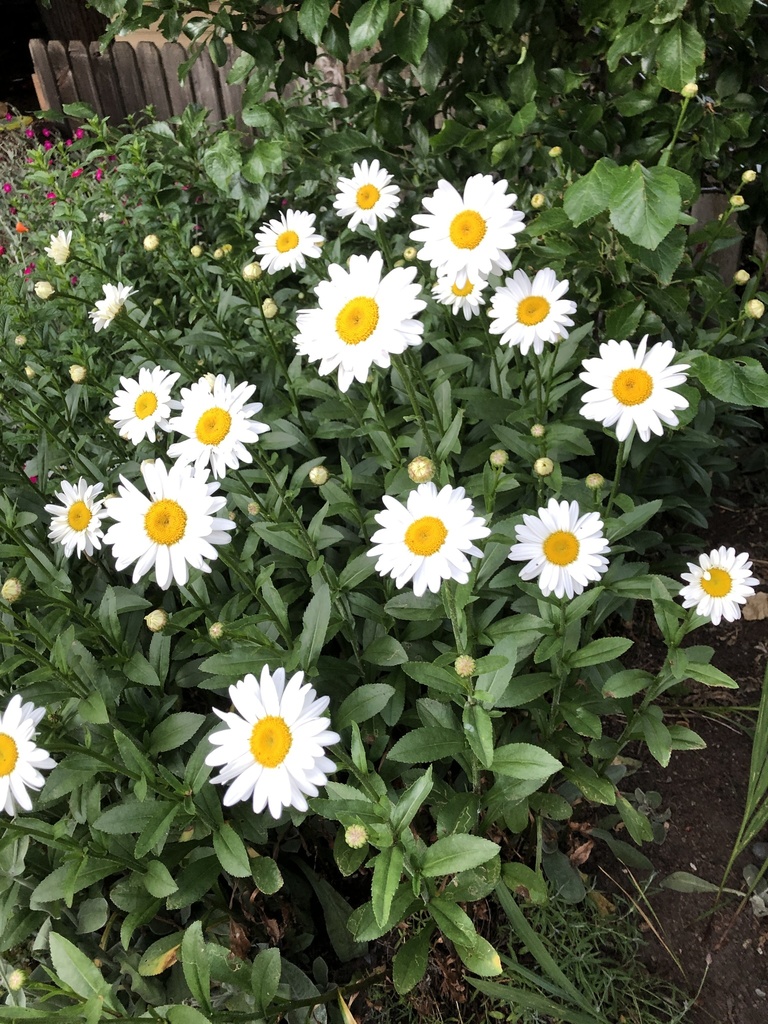
Leucanthemum maximum, commonly known as Shasta Daisy or Storkrage, is an herbaceous perennial from the Asteraceae family, valued for its large, showy white flowers with a yellow center. Its classic daisy appearance makes it an excellent choice for garden borders, flower beds, and as a cut flower, bringing a cheerful, country feel. It can reach heights of up to 90 cm, creating a notable visual impact in any space.
Native range
Southwestern Europe
Care tips
It requires full sun for abundant flowering, though it can tolerate some partial shade in very hot climates. Watering should be regular, keeping the substrate moist but not waterlogged, especially during dry periods and flowering. It prefers well-drained soils, rich in organic matter, and with a neutral to slightly acidic pH. A common mistake is overwatering in heavy soils, which can lead to root rot; ensure optimal drainage.
How to save a dying Shasta daisy
- Warning signs
- Yellow or wilting leaves, soft stems, no blooms or premature wilting flowers.
- First aid
- Check drainage and soil moisture. If waterlogged, gently remove excess water. If dry, water thoroughly.
- What kills it
- Overwatering causing root rot, or underwatering causing dehydration, and insufficient direct sunlight.
- Can it be saved?
- Yes, if roots aren't completely rotted or dried out. Act quickly to adjust watering and sun exposure.