Canary Islands laurel (Kleinia neriifolia)
Care, watering, light and tips for Canary Islands laurel on Floravia.
Quick facts
- Family: Asteraceae
- Difficulty: Easy to care for
- Watering: every 10 days
- Light: Full sun
- Temperature: 0–35 °C
- Toxicity: Toxic to pets
About Canary Islands laurel
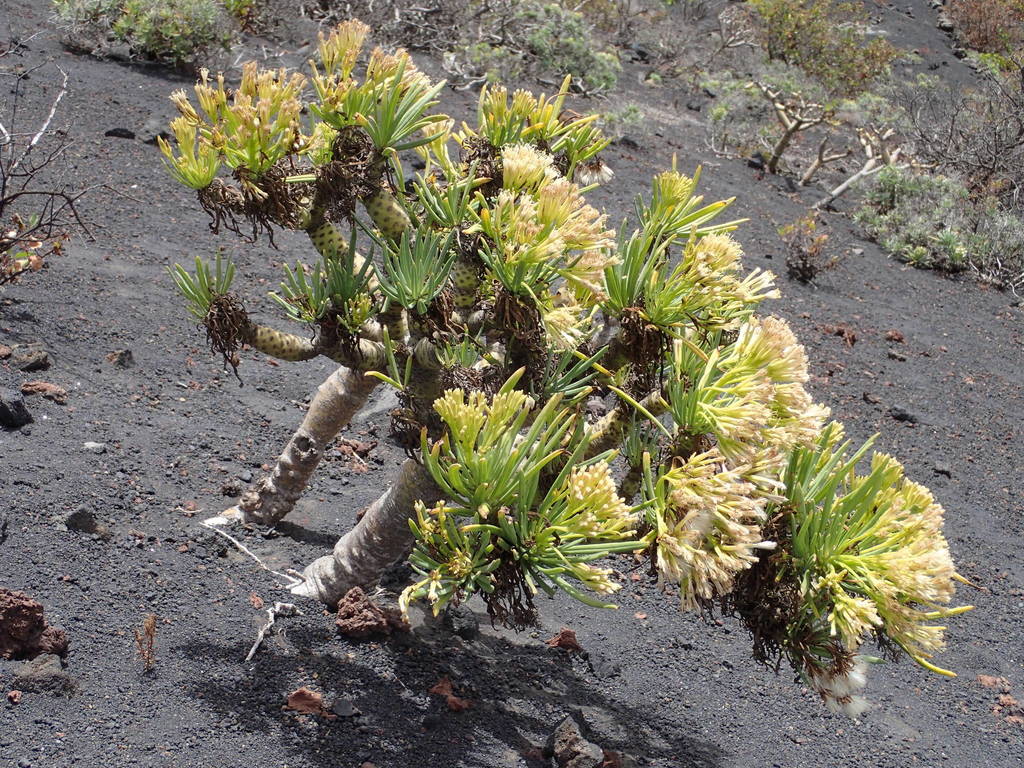
Kleinia neriifolia, also known as oleanderstånds, is a succulent shrub native to the Canary Islands, characterized by its thick, fleshy stems and elongated leaves resembling those of laurel or oleander. During winter, it produces yellow, cluster-like inflorescences that contrast with its foliage. It is an ideal plant for Mediterranean climate gardens, rockeries, or as a standalone specimen in large pots, adding an exotic and sculptural touch.
Native range
Canary Islands
Care tips
It requires full sun or bright partial shade for optimal growth and abundant flowering. Watering should be moderate, allowing the substrate to dry out completely between waterings, and very sparse in winter to prevent root rot. Use a well-draining substrate, preferably a cactus and succulent mix. A common mistake is overwatering, especially during colder months, which can be fatal for this species.
How to save a dying Canary Islands laurel
- Warning signs
- Soft, wrinkled, drooping leaves (lack of water); black spots or rot at base (overwatering).
- First aid
- Check substrate. If dry, water moderately. If wet, stop watering and improve ventilation. Remove damaged leaves.
- What kills it
- Overwatering is fatal. Also prolonged drought or extreme cold (below 5°C).
- Can it be saved?
- Yes, if you act quickly. It's very resilient. Take healthy cuttings if the mother plant is too damaged.