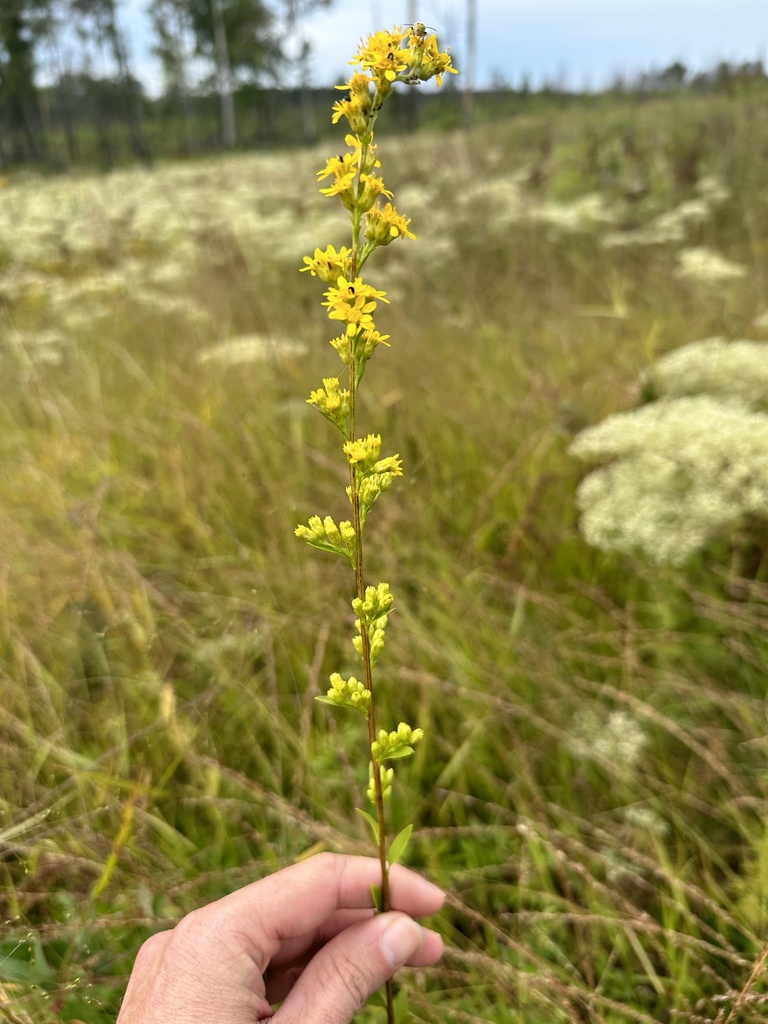
Late goldenrod (Solidago tarda)
Care, watering, light and tips for Late goldenrod on Floravia.
Quick facts
- Family: Asteraceae
- Difficulty: Easy to care for
- Watering: every 3 days
- Light: Full sun
- Temperature: 0–35 °C
About Late goldenrod
Solidago tarda, commonly known as Atlantic goldenrod, is a perennial plant native to North America, valued for its vibrant yellow blooms that appear in late summer and early autumn. Its dense spikes of flowers add a splash of color to wild gardens, meadows, and roadsides, attracting pollinators. It is ideal for giving a naturalistic and wild look to the garden.
Native range
Southeastern United States, primarily in the Atlantic coastal states.
Care tips
It prefers full sun exposure for optimal flowering, though it tolerates some partial shade. This plant is drought-tolerant once established but benefits from moderate watering during dry spells, especially while blooming. It adapts to a wide range of soils, as long as they are well-draining, even poor soils. Avoid overwatering, as it can lead to root rot.
How to save a dying Late goldenrod
- Warning signs
- Yellowing, wilting basal leaves, soft stems, poor or no flowering. Leaf spots from fungi.
- First aid
- Check soil drainage and moisture. Prune damaged stems. Apply fungicide if spots appear. Provide balanced fertilizer.
- What kills it
- Overwatering causing root rot. Lack of direct sunlight. Heavy, poorly draining soil. Aphids or mildew.
- Can it be saved?
- Yes, if roots aren't completely rotted and watering/light issues are corrected promptly.