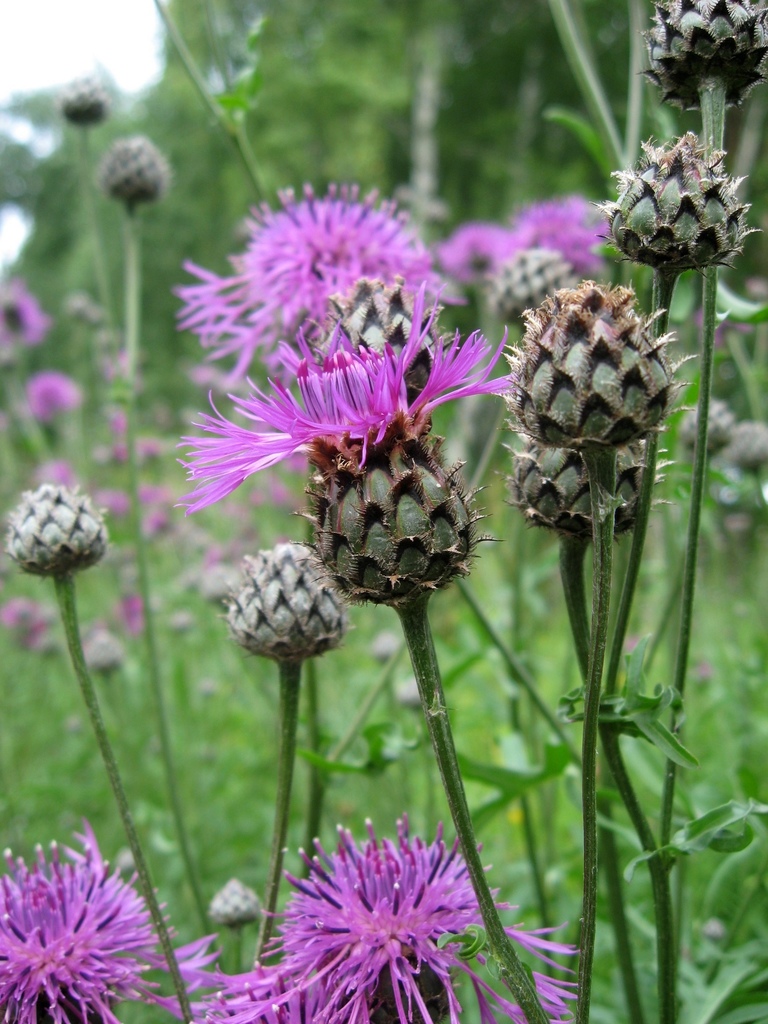
Greater knapweed (Centaurea scabiosa)
Care, watering, light and tips for Greater knapweed on Floravia.
Quick facts
- Family: Asteraceae
- Difficulty: Easy to care for
- Watering: every 7 days
- Light: Full sun
- Temperature: 0–35 °C
About Greater knapweed
Centaurea scabiosa, known as Greater Knapweed, is a robust perennial native to Europe, distinguished by its showy purple-pink flowers and grey-green foliage. Its thistle-like flower heads, without sharp spines, attract a wide array of pollinators, especially bees and butterflies. It is ideal for cottage gardens, sunny borders, or naturalized meadows, adding a wild and colorful touch.
Native range
Europe and temperate Western Asia
Care tips
This plant thrives in full sun, requiring at least 6 hours of direct sunlight for abundant flowering. It prefers well-drained soils, even poor or calcareous ones, and is quite drought-tolerant once established, so watering should be moderate, avoiding waterlogging. A common mistake is planting it in partial shade or heavy, wet soils, which can reduce flowering and overall plant health.
How to save a dying Greater knapweed
- Warning signs
- Wilted or yellowing leaves, soft stems, lack of flowering or withered flowers.
- First aid
- Check drainage. If waterlogged, repot in dry soil. If dry, water thoroughly.
- What kills it
- Excessive moisture and poor drainage, leading to root rot. Lack of direct sunlight.
- Can it be saved?
- Yes, if roots aren't completely rotted. Act quickly with drainage and light.