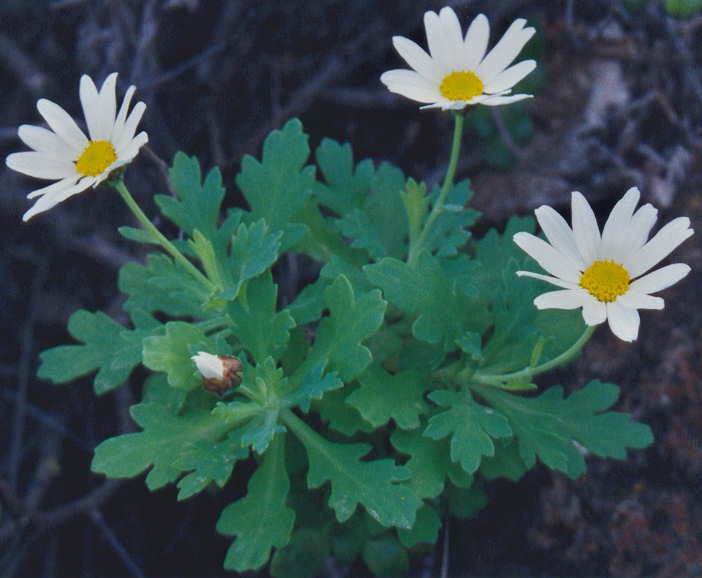
Canary Island marguerite (Argyranthemum coronopifolium)
Care, watering, light and tips for Canary Island marguerite on Floravia.
Quick facts
- Family: Asteraceae
- Difficulty: Easy to care for
- Watering: every 4 days
- Light: Full sun
- Temperature: 0–35 °C
About Canary Island marguerite
Argyranthemum coronopifolium, commonly known as the Canary Island Marguerite, is a perennial subshrub from the Asteraceae family, native to the Canary Islands, recognized for its delicate, finely divided leaves that give it a feathery appearance, and its abundant white or yellow daisy-like flowers. Its grey-green foliage and prolonged blooming make it ideal for coastal gardens, rockeries, or as a potted plant on balconies and terraces, adding a wild and elegant touch. It is a hardy plant that can form dense, attractive clumps.
Native range
Canary Islands
Care tips
This Canary Island Marguerite thrives in full sun and requires moderate watering, allowing the substrate to dry out slightly between waterings to prevent waterlogging. It prefers well-drained soils, even sandy or rocky ones, and tolerates drought once established. A common mistake is overwatering, which can lead to root rot; it's better to err on the side of dryness than wetness. Deadheading spent flowers will encourage more abundant and prolonged blooming.
How to save a dying Canary Island marguerite
- Warning signs
- Yellowing or wilting leaves, soft stems, no blooms. May indicate overwatering or lack of light.
- First aid
- Check drainage and soil moisture. Move to a sunnier spot. Prune spent flowers for new growth.
- What kills it
- Waterlogging is fatal; roots rot easily. Lack of direct sunlight also weakens it quickly.
- Can it be saved?
- Yes, if you act fast. Remove damaged parts, improve drainage and sun exposure. It's resilient with proper care.