Mouse-ear hawkweed (Pilosella officinarum)
Care, watering, light and tips for Mouse-ear hawkweed on Floravia.
Quick facts
- Family: Asteraceae
- Difficulty: Easy to care for
- Watering: every 3 days
- Light: Full sun
- Temperature: 0–35 °C
About Mouse-ear hawkweed
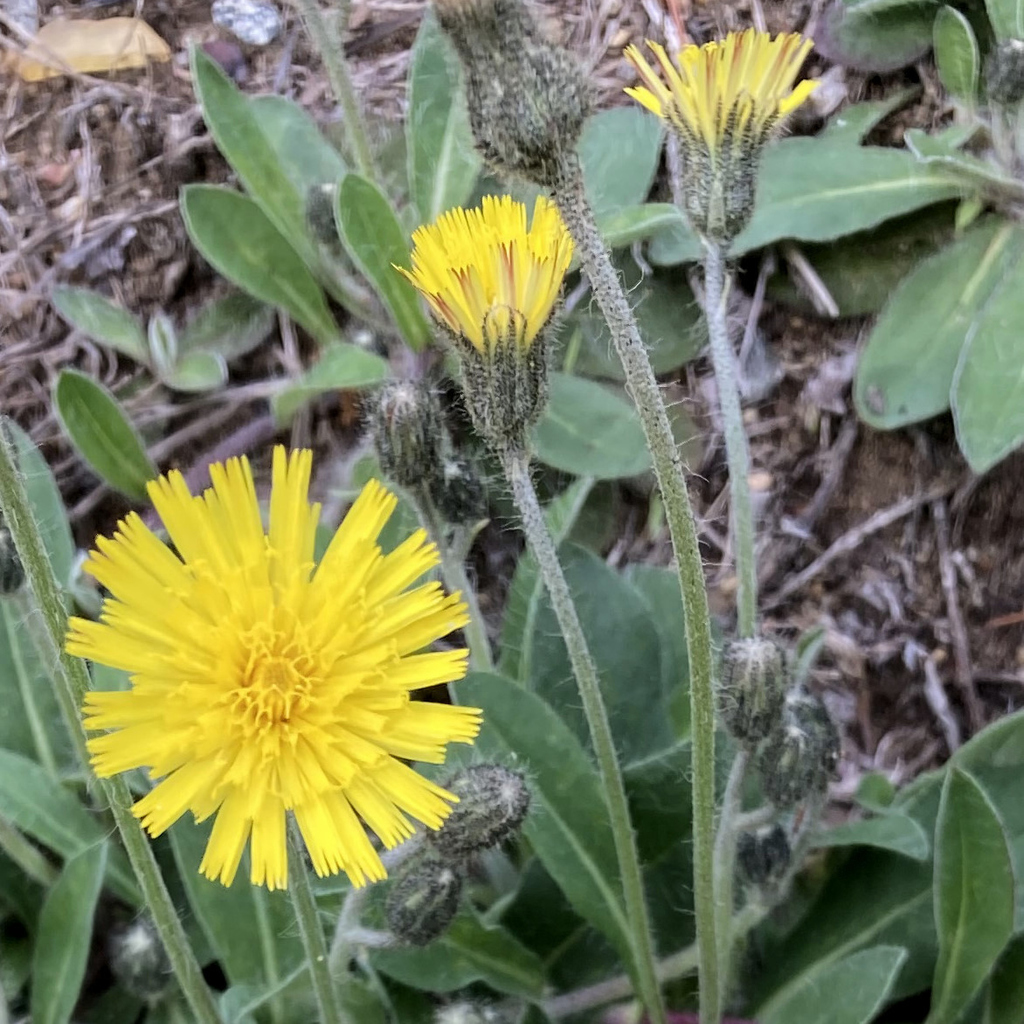
Pilosella officinarum, commonly known as mouse-ear hawkweed, is a small perennial herbaceous plant belonging to the Asteraceae family, characterized by its rosettes of basal leaves covered in soft hairs and its delicate yellow flowers. It is an excellent choice for ground cover in rock gardens, slopes, or between paving stones, adding a wild and natural touch. Its flowers, appearing in spring and summer, attract pollinators and offer a charming contrast with its silvery foliage.
Native range
Europe and Western Asia
Care tips
This species prefers full sun to light partial shade and is very drought-tolerant once established. It requires well-drained soil, preferably sandy or stony, and does not need significant nutrient input. A common mistake is overwatering, which can lead to root rot; it's best to let the soil dry out completely between waterings. It is a low-maintenance plant that spreads easily by stolons.
How to save a dying Mouse-ear hawkweed
- Warning signs
- Yellowish or whitish leaves, soft stems, no flowering, general wilting.
- First aid
- Replant in well-drained soil, reduce watering, place in partial shade, prune faded flowers.
- What kills it
- Overwatering, compacted soil, intense direct sun, not pruning faded flowers.
- Can it be saved?
- Yes, if you act fast and correct conditions. It's quite resilient.