Quaking grass (Briza maxima)
Care, watering, light and tips for Quaking grass on Floravia.
Quick facts
- Family: Poaceae
- Difficulty: Easy to care for
- Watering: every 7 days
- Light: Partial shade
- Temperature: 10–30 °C
About Quaking grass
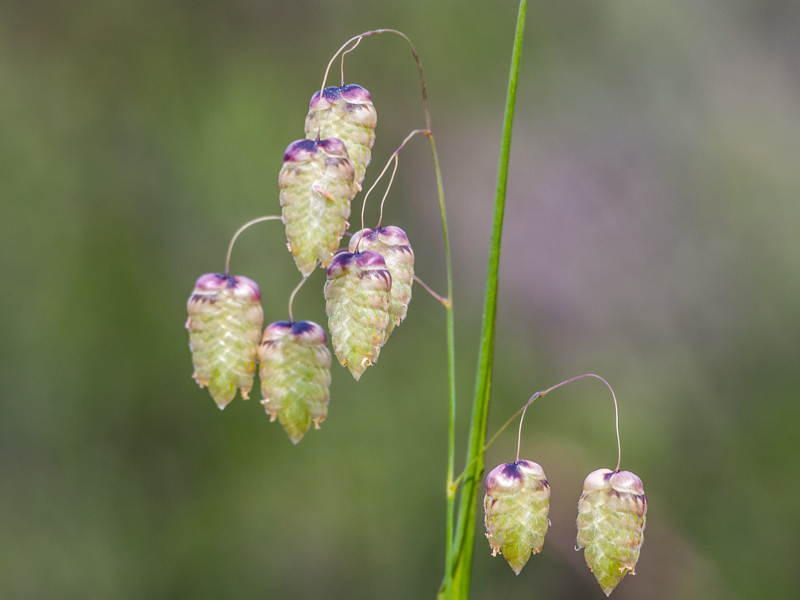
Briza maxima, commonly known as 'quaking grass' or 'big quaking grass', is an ornamental annual grass from the Poaceae family, native to the Mediterranean basin. It is characterized by its drooping, heart-shaped spikelets, which sway delicately in the breeze, creating a very attractive visual effect. It is ideal for flower beds, borders, rock gardens, or as part of dried flower arrangements due to its ethereal beauty.
Native range
Mediterranean region (Southern Europe, North Africa, and Western Asia)
Care tips
It prefers full sun exposure for optimal growth and abundant flowering, although it tolerates light partial shade. It requires moderate watering, allowing the top layer of the substrate to dry slightly between waterings, and is quite drought-tolerant once established. It adapts to most well-drained soils, even poor ones, but prefers sandy types. A common mistake is overwatering, which can lead to root rot.
How to save a dying Quaking grass
- Warning signs
- Yellowish or brown, wilted, dull leaves. Dry or prematurely dropped seed heads.
- First aid
- Transplant to a well-drained, semi-shaded spot. Water moderately if soil is dry. Remove severely damaged leaves.
- What kills it
- Overwatering causing root rot, or complete lack of water during dry spells. Full shade or intense direct sun.
- Can it be saved?
- Yes, if roots are not completely rotted or dried out. Act quickly with first aid.