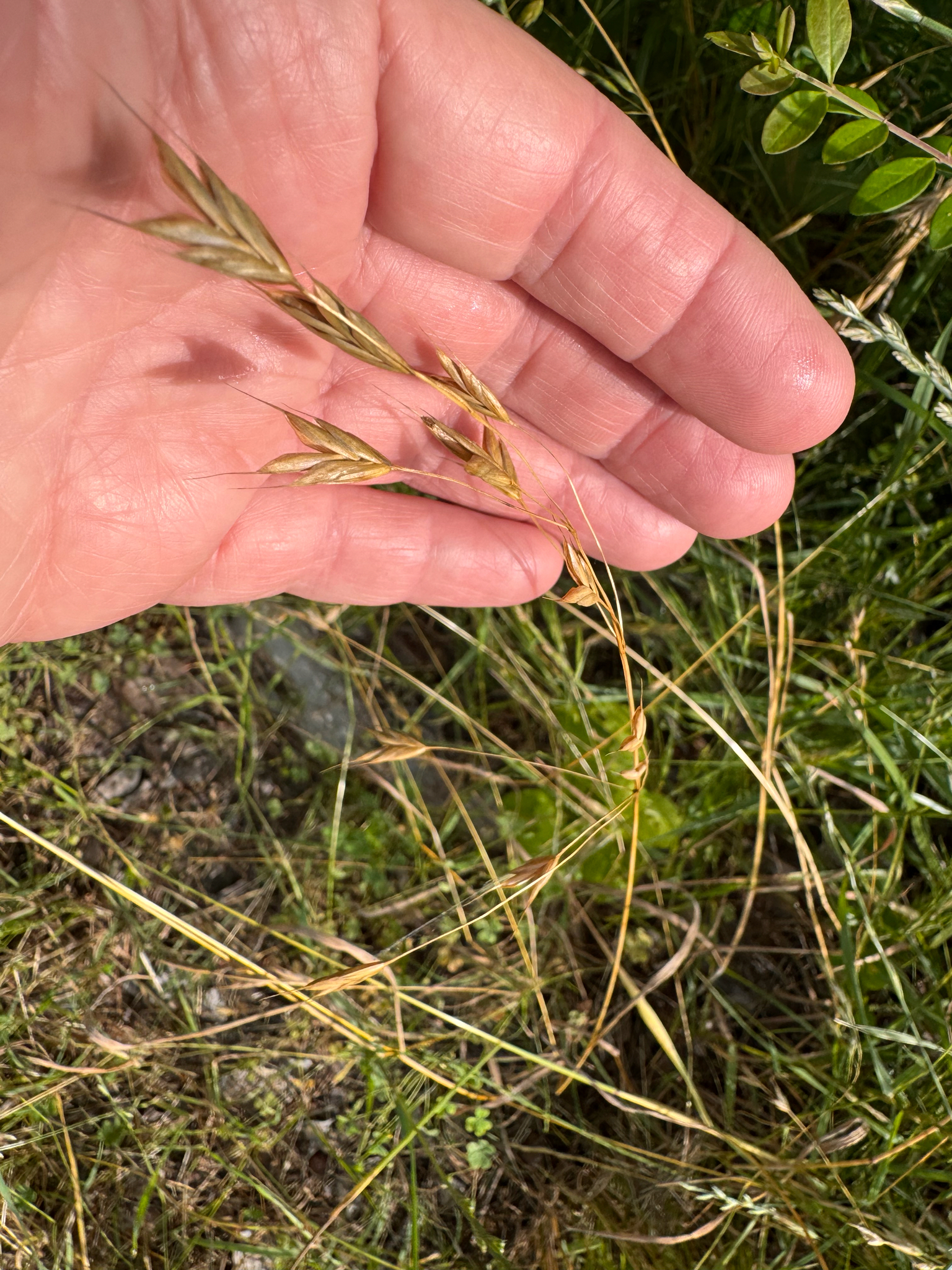
Rye brome (Bromus secalinus)
Care, watering, light and tips for Rye brome on Floravia.
Quick facts
- Family: Poaceae
- Difficulty: Moderate care
- Watering: every 7 days
- Light: Partial shade
- Temperature: 10–30 °C
About Rye brome
Bromus secalinus, commonly known as rye brome or rugfaks, is an annual grass that can grow 30 to 100 cm tall. It is characterized by its drooping, loose spikelets, which give it a delicate and ethereal appearance. Although often considered a "weed" in cereal crops, its natural grace can be appreciated in naturalistic gardens or ornamental meadows, where its movement in the wind adds a dynamic touch.
Native range
Europe and West Asia
Care tips
Bromus secalinus thrives in full sun in well-drained soils, although it tolerates a variety of edaphic conditions, including poor soils. Watering should be moderate, as it is a drought-tolerant plant once established; overwatering can be detrimental. For cultivation, a universal potting mix with good drainage is sufficient. A common mistake to avoid is overwatering, which can lead to fungal diseases and weak root development.
How to save a dying Rye brome
- Warning signs
- Rolled or yellowing leaves, small or absent grains on spikes, stunted growth.
- First aid
- Ensure adequate direct sunlight. If potted, consider transplanting for root space. Check for compacted soil.
- What kills it
- Soil compaction, lack of direct sunlight or too much shade. Strong competition from other plants.
- Can it be saved?
- Yes, if addressed promptly. It's resilient but needs space and good exposure.