Red brome (Bromus rubens)
Care, watering, light and tips for Red brome on Floravia.
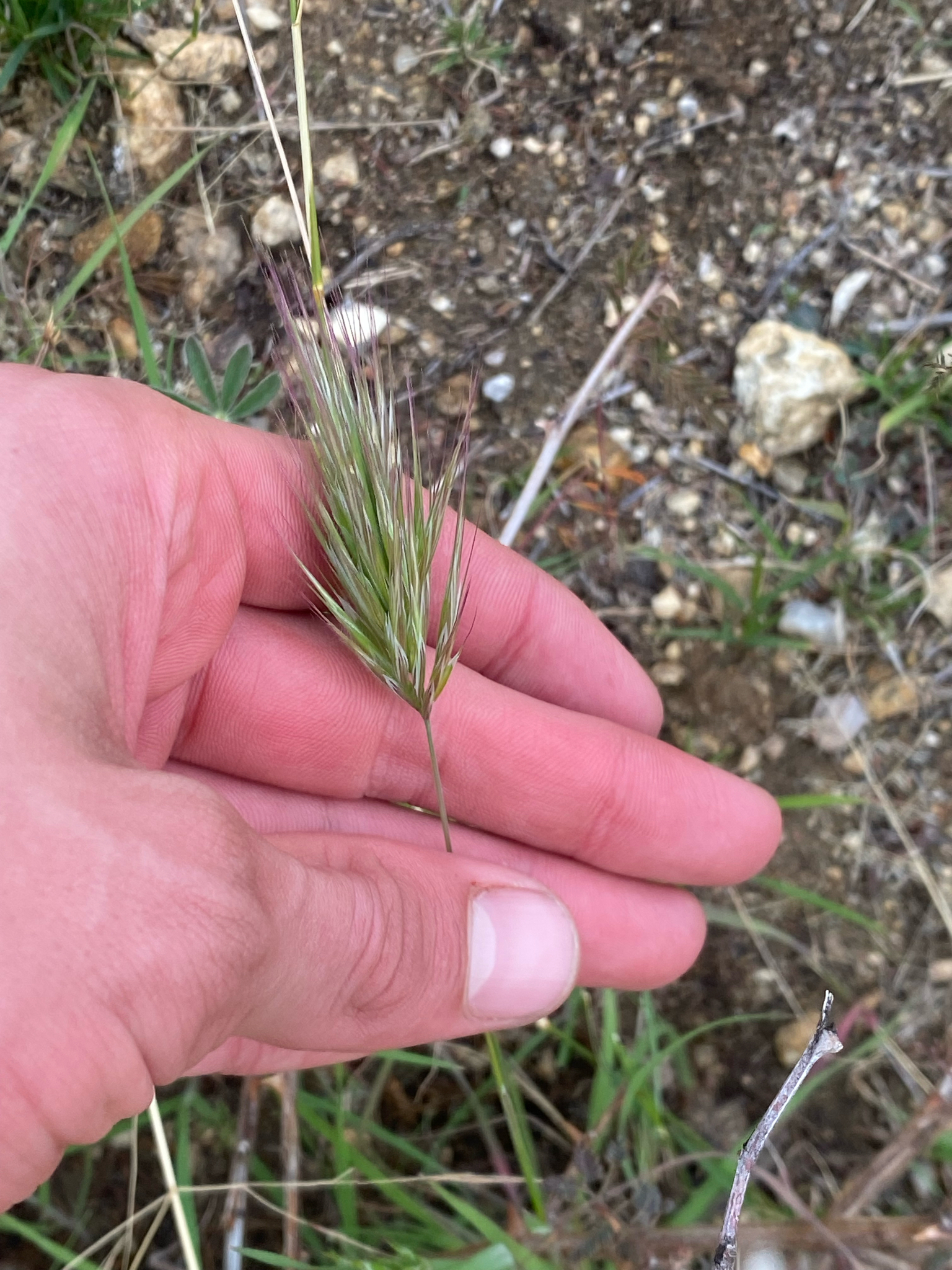
Quick facts
- Family: Poaceae
- Difficulty: Easy to care for
- Watering: every 7 days
- Light: Partial shade
- Temperature: 10–30 °C
About Red brome
Bromus rubens, commonly known as Red Brome or Foxtail Brome, is an invasive annual grass native to the Mediterranean region, which has spread widely in arid and semi-arid areas worldwide. It is characterized by its dense, reddish spikelets that give it a distinctive appearance, especially when mature. Although an invasive species, in certain contexts it can be used in degraded soil restoration projects, where its rapid growth can help stabilize the land, but always with caution due to its potential to displace native flora.
Native range
Mediterranean region, Southwest Asia, and North Africa.
Care tips
This species is not commonly cultivated as an ornamental plant due to its invasive nature and its classification as a weed in many ecosystems. If encountered in a land management context, it is crucial to control its spread and prevent its establishment in areas where it can compete with native vegetation. It does not require supplemental watering in its natural habitat once established, and prefers well-drained soils exposed to full sun. The common mistake to avoid is allowing its uncontrolled dispersal, as its seeds readily attach to clothing and animals, facilitating its expansion.
How to save a dying Red brome
- Warning signs
- Dry, yellow, or brown leaves. The entire plant looks wilted and lifeless, with dry, brittle seed heads.
- First aid
- This is an annual plant. If it has already seeded, its life cycle is over. If not, water lightly and move to a cool place.
- What kills it
- Trying to keep it alive beyond its natural cycle. Excessive moisture or shade weakens it.
- Can it be saved?
- If it hasn't completed its cycle and is just stressed, yes. If it has already seeded, no, its life is over.