Downy brome (Bromus tectorum)
Care, watering, light and tips for Downy brome on Floravia.
Quick facts
- Family: Poaceae
- Difficulty: Demanding
- Watering: every 7 days
- Light: Partial shade
- Temperature: 10–30 °C
- Toxicity: Toxic to pets
About Downy brome
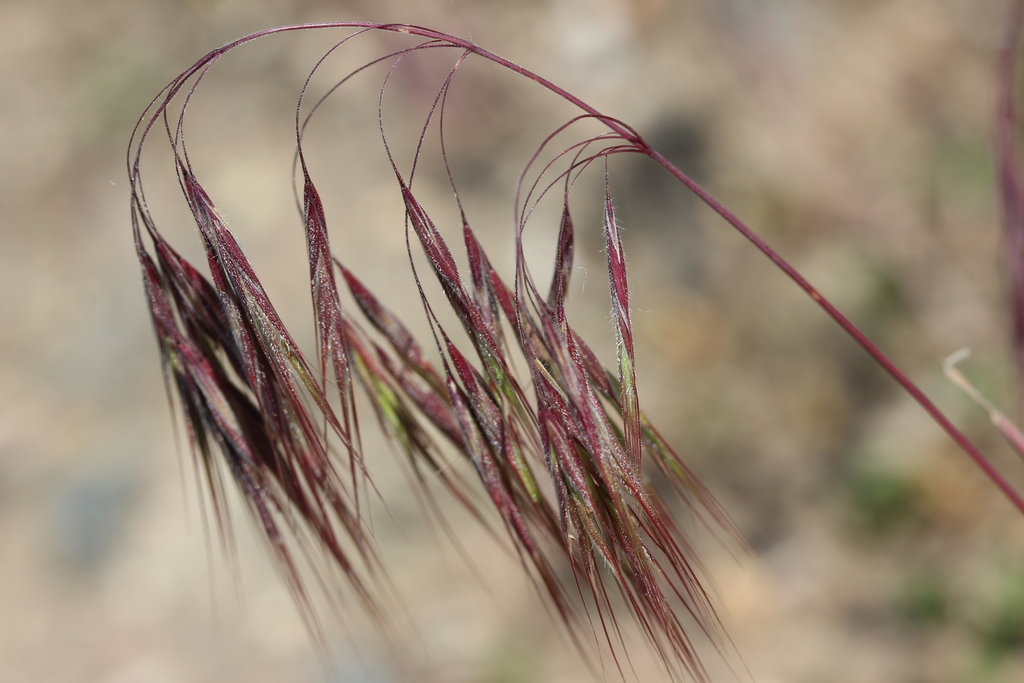
Bromus tectorum, commonly known as downy brome or cheatgrass, is an invasive annual grass native to Europe. It is characterized by its drooping, hairy spikelets that turn a reddish-purple color as they mature, creating a distinctive but often problematic landscape in dry, disturbed areas.
Native range
Eurasia and North Africa
Care tips
As an invasive species, Bromus tectorum is not intentionally cultivated. Its control focuses on preventing spread, mechanical removal before seed maturation, and the use of specific herbicides. Avoiding excessive soil disturbance and restoring native vegetation is crucial for its management.
How to save a dying Downy brome
- Warning signs
- Dry, rolled leaves, overall straw color, brittle stems.
- First aid
- Remove dead plants to prevent spread. If potted, consider repotting to well-draining soil if compacted.
- What kills it
- Excessive moisture or very compacted soils preventing good drainage, despite its drought resistance.
- Can it be saved?
- It's an invasive annual; if dying, it's likely completing its cycle or the soil is unsuitable. Rescue is difficult.