Annual bluegrass (Poa annua)
Care, watering, light and tips for Annual bluegrass on Floravia.
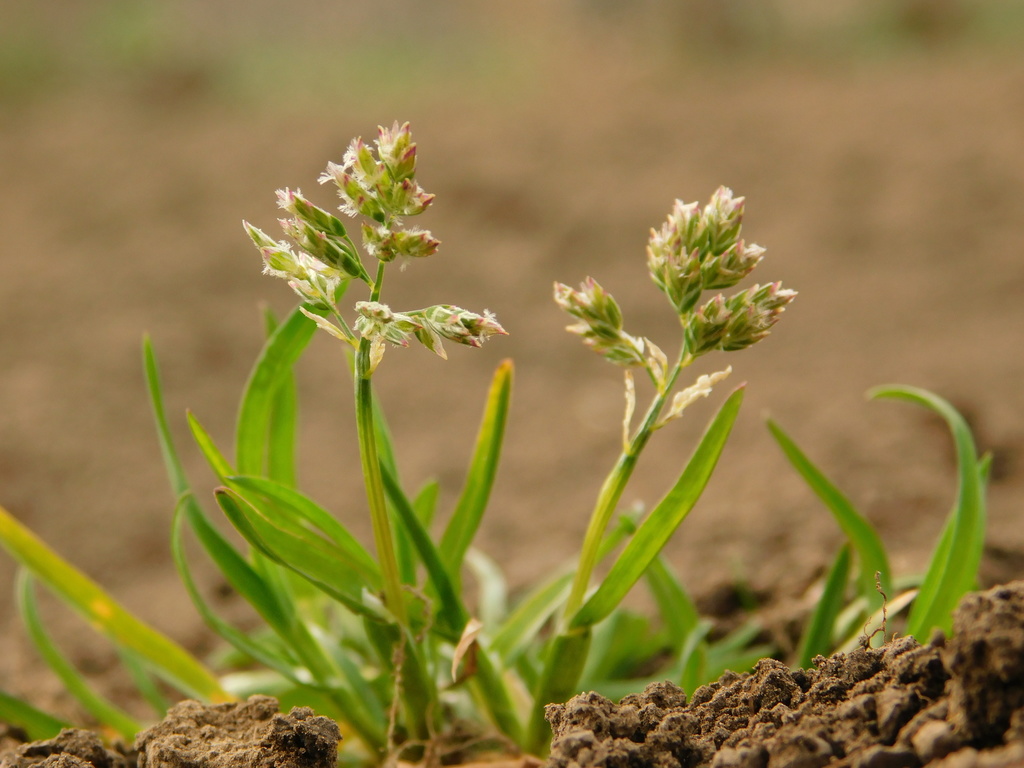
Quick facts
- Family: Poaceae
- Difficulty: Easy to care for
- Watering: every 7 days
- Light: Partial shade
- Temperature: 10–30 °C
- Toxicity: Toxic to pets
About Annual bluegrass
Poa annua, commonly known as annual bluegrass, is a short-lived annual grass characterized by its bright green leaves and small, dense seed heads. While often considered a weed in cultivated lawns, it can provide quick green cover in disturbed areas or as part of low-maintenance grass mixes. Its delicate appearance and adaptability make it interesting for botanical studies and as forage in certain contexts.
Native range
Europe and temperate Asia
Care tips
It prefers partial shade or full sun in temperate climates, and moist but well-drained soils; it does not tolerate prolonged drought. Frequent watering is required to maintain soil moisture, especially in warm climates, although it is susceptible to waterlogging. It adapts to a wide variety of soils, from sandy to clayey, as long as they are not excessively compacted. A common mistake is to try to eradicate it completely with strong herbicides; instead, consider integrated management including soil improvement and planting more desirable species.
How to save a dying Annual bluegrass
- Warning signs
- Yellowing or browning leaves, wilting; stunted growth. It's an annual, its life cycle is short.
- First aid
- Ensure consistent watering, but avoid waterlogging. May need partial shade in intense sun.
- What kills it
- Lack of water or prolonged drought. As an annual, it dies after seeding.
- Can it be saved?
- Difficult if too far into its cycle. Better to focus on preventing unwanted growth.