Mossman River grass (Cenchrus echinatus)
Care, watering, light and tips for Mossman River grass on Floravia.
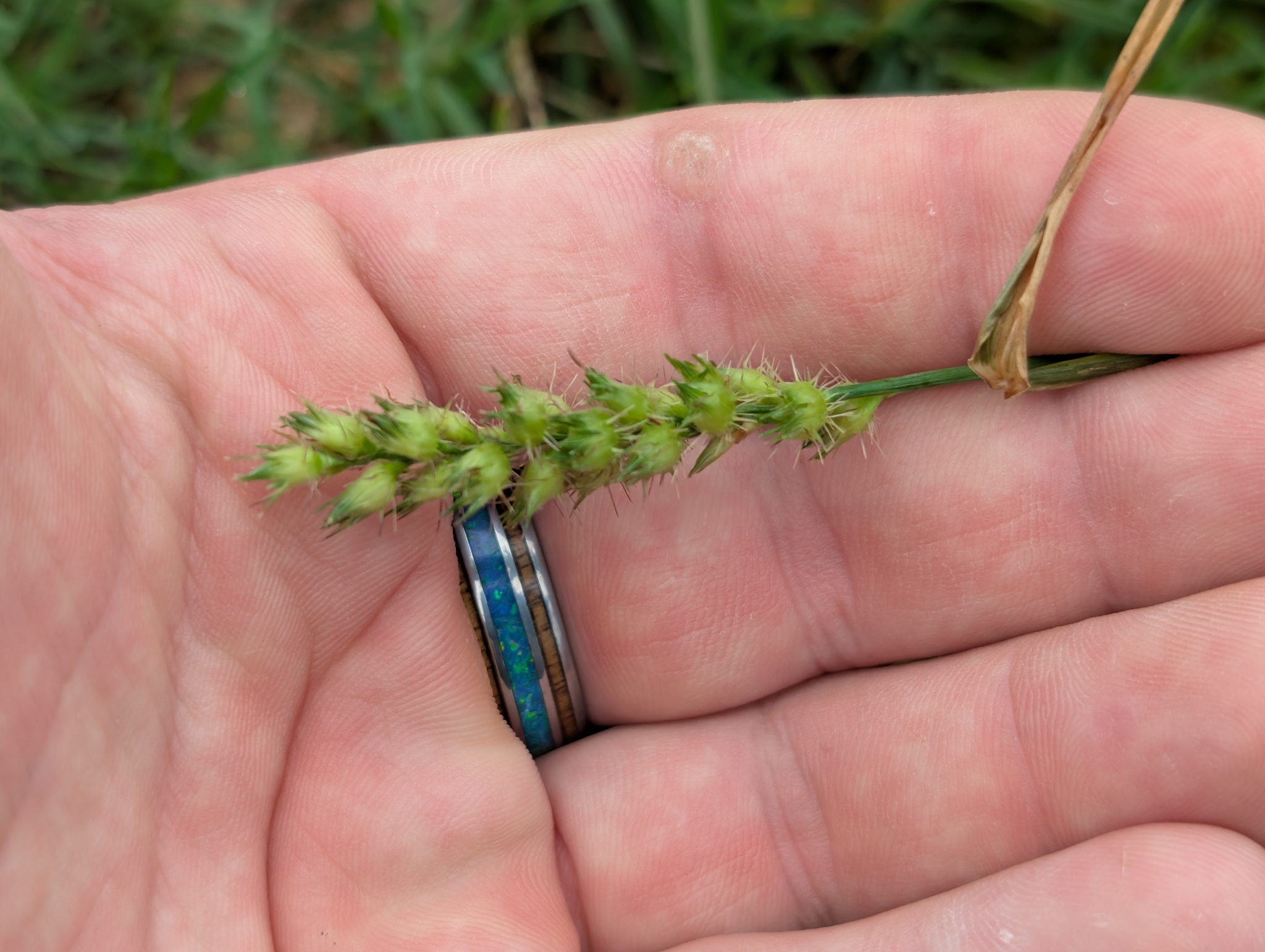
Quick facts
- Family: Poaceae
- Difficulty: Moderate care
- Watering: every 7 days
- Light: Partial shade
- Temperature: 10–30 °C
- Toxicity: Toxic to pets
About Mossman River grass
Cenchrus echinatus, commonly known as Spiny Sandbur or Sandspur, is a low-growing annual grass distinguished by its globular, spiny burrs that readily attach to clothing and animal fur. While often considered a weed in agricultural settings, its resilience and adaptability make it intriguing for botanical studies or in native plant gardens where a challenge is sought. Its spiny inflorescences, though problematic, lend it a rustic and distinctive appearance.
Native range
North and South America (tropical and subtropical regions)
Care tips
This species thrives in full sun across a wide range of soils, including poor and sandy ones, making it extremely adaptable and undemanding. Watering should be minimal once established, as it tolerates drought very well; excessive moisture can be detrimental. It requires no fertilization and spreads easily by seeds, so the main care involves controlling its dispersal to prevent it from becoming a nuisance. A common mistake is underestimating its prolific spreading capacity and its ability to rapidly colonize new areas.
How to save a dying Mossman River grass
- Warning signs
- Yellowish or brown, wilted and dry leaves. 'Cenchrus echinatus' is very tough, so this indicates severe stress.
- First aid
- Transplant to well-drained soil, water deeply, and ensure full sun. Remove any dry parts.
- What kills it
- Excessive shade and constant waterlogging, though it's adaptable. Total lack of water for very long periods also weakens it.
- Can it be saved?
- Yes, it's a very rustic plant and recovers well if conditions are corrected. Act quickly at the first symptoms.