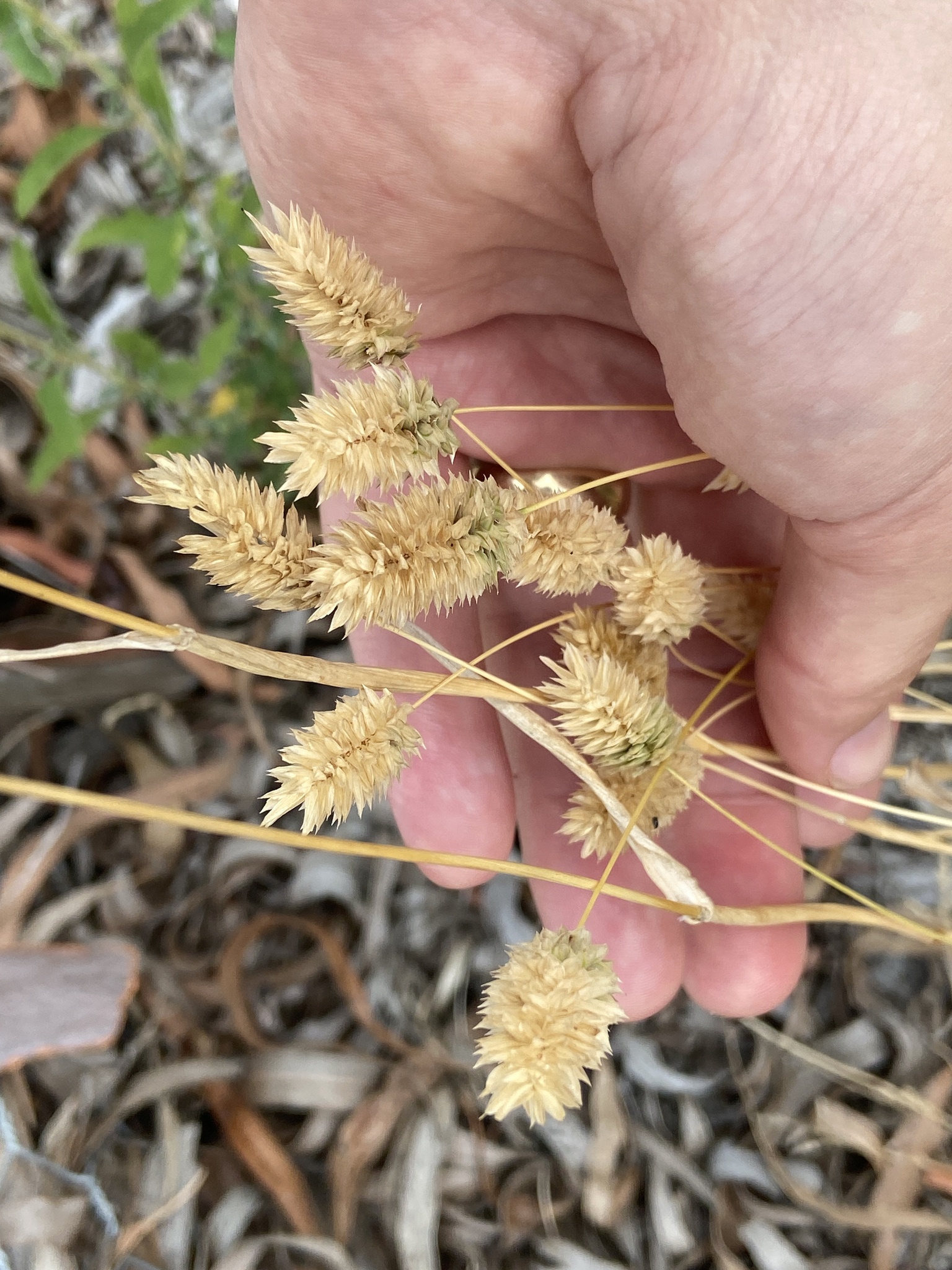
Lesser canary grass (Phalaris minor)
Care, watering, light and tips for Lesser canary grass on Floravia.
Quick facts
- Family: Poaceae
- Difficulty: Demanding
- Watering: every 7 days
- Light: Partial shade
- Temperature: 10–30 °C
About Lesser canary grass
Phalaris minor, commonly known as small canarygrass, is a small to medium-sized annual grass featuring erect stems and dense, greenish flower spikes. While often considered a weed in agricultural settings, its delicate habit and resilience make it suitable for wild gardens or as part of seed mixes for revegetation. It can add a fine, natural texture to spaces with a more rustic or low-maintenance approach.
Native range
Temperate regions of Europe, Asia, and North Africa
Care tips
It prefers full sun exposure and well-drained soils, although it is adaptable to a variety of conditions. Watering should be moderate, allowing the substrate to dry out slightly between waterings, as it tolerates drought quite well once established. It is not demanding regarding substrate, thriving even in poor soils. A common mistake is overwatering, which can lead to root rot, especially in heavy soils.
How to save a dying Lesser canary grass
- Warning signs
- Rolled or yellowing leaves, stunted growth. Weak or drooping stems.
- First aid
- Check soil moisture, water if dry. Protect from extreme heat or frost.
- What kills it
- Prolonged drought, waterlogging, or exposure to extreme temperatures.
- Can it be saved?
- Yes, if roots are not rotted and its needs are addressed promptly.