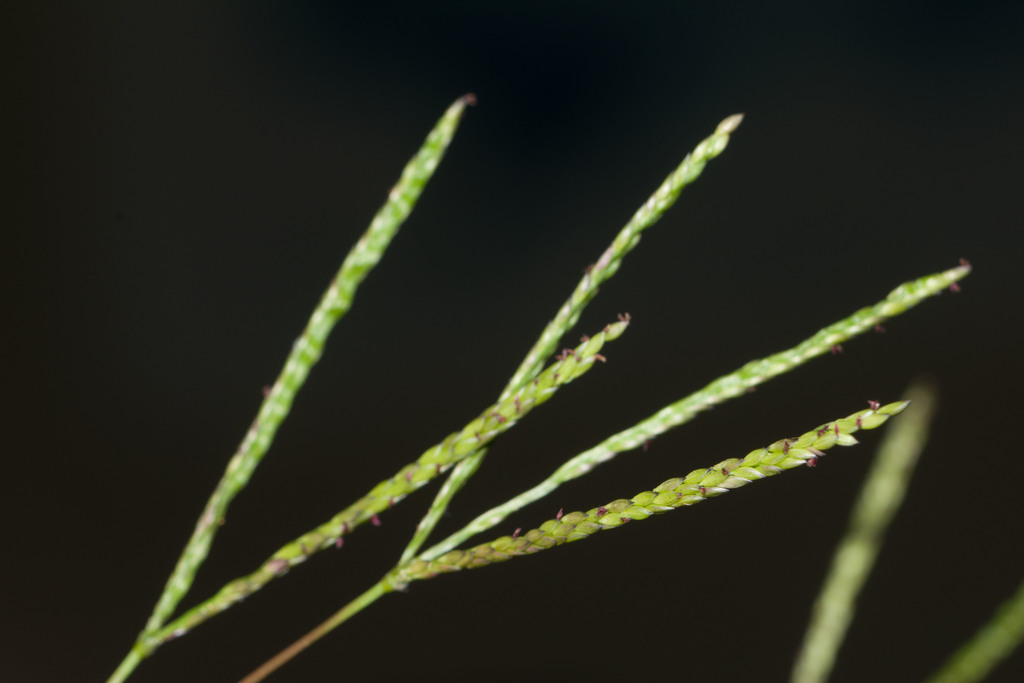
Crabgrass (Digitaria fuscescens)
Care, watering, light and tips for Crabgrass on Floravia.
Quick facts
- Family: Poaceae
- Difficulty: Easy to care for
- Watering: every 7 days
- Light: Partial shade
- Temperature: 10–30 °C
About Crabgrass
Digitaria fuscescens, commonly known as Yellow Crabgrass, is an annual grass with a prostrate to semi-erect growth habit, characterized by its lanceolate leaves and yellowish to brownish spikelets. While often considered a 'weed' in lawns, its fine texture and adaptability make it interesting for low-maintenance areas or as forage. It can form dense mats in sunny, disturbed areas.
Native range
Tropical and subtropical Asia
Care tips
This plant prefers full sun and tolerates a wide range of soils, though it favors well-drained and not excessively fertile ones. Watering is generally unnecessary once established, as it is very drought-tolerant; excessive moisture can be detrimental. For intentional cultivation, avoid heavily compacted soils and dense shade, which will limit its development. A common mistake is attempting indiscriminate herbicide eradication, when in certain contexts it can be beneficial.
How to save a dying Crabgrass
- Warning signs
- Yellowish or brown leaves, stunted growth, weak stems.
- First aid
- Manually remove plants, preferably before they seed. If widespread, consider shallow hoeing.
- What kills it
- Allowing it to produce seeds, as each plant can generate thousands and perpetuate the problem.
- Can it be saved?
- For the garden, yes, by controlling its spread. As an ornamental plant, it has no value and should be removed.