Smallflower crabgrass (Digitaria parviflora)
Care, watering, light and tips for Smallflower crabgrass on Floravia.
Quick facts
- Family: Poaceae
- Difficulty: Moderate care
- Watering: every 7 days
- Light: Partial shade
- Temperature: 10–30 °C
About Smallflower crabgrass
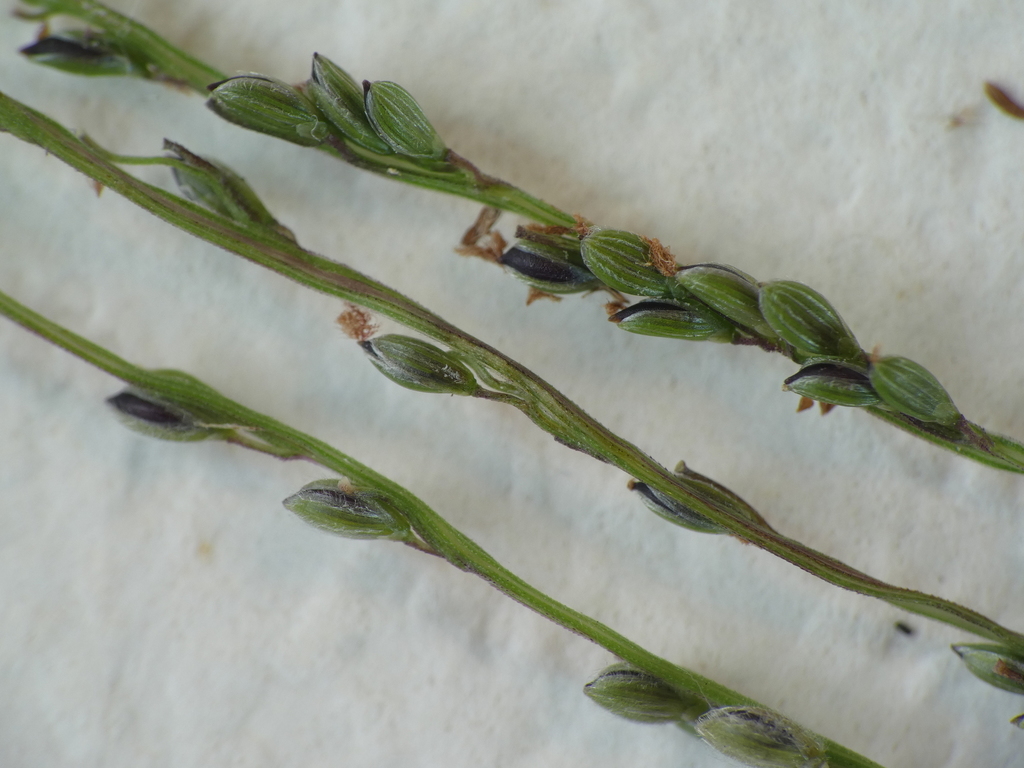
Digitaria parviflora, commonly known as small-flower finger grass, is a low to medium-sized annual grass that forms dense clumps. Its stems can be prostrate or ascending, featuring narrow leaves and small, digitate spike-like inflorescences. It is ideal for revegetating degraded areas, erosion control on slopes, or as a low-maintenance ground cover in gardens.
Native range
Tropical and subtropical America
Care tips
This species thrives in full sun to light partial shade for optimal growth. It is highly drought-tolerant once established, requiring sporadic watering in dry climates; avoid overwatering to prevent root rot. It adapts to a wide range of soils, including poor and sandy ones, as long as they have good drainage. A common mistake is over-fertilizing, as it is a plant with low nutritional requirements.
How to save a dying Smallflower crabgrass
- Warning signs
- Yellowish or whitish leaves, weak or prostrate stems, stunted growth.
- First aid
- Improve soil aeration. If potted, consider repotting to a larger one with good drainage. Avoid waterlogging.
- What kills it
- Excessive moisture and lack of direct sunlight. It loves sun and well-drained soil.
- Can it be saved?
- Yes, if lack of light and excess water are corrected quickly. It's tough, but doesn't tolerate prolonged waterlogging.