Fountain grass (Cenchrus setaceus)
Care, watering, light and tips for Fountain grass on Floravia.
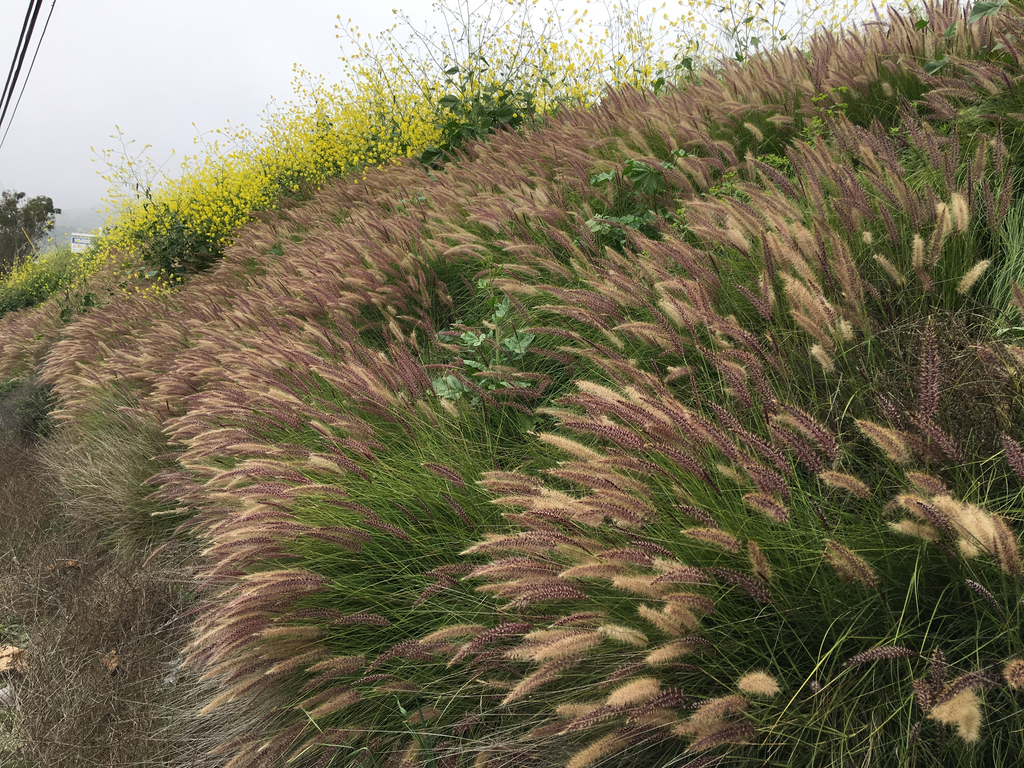
Quick facts
- Family: Poaceae
- Difficulty: Easy to care for
- Watering: every 7 days
- Light: Partial shade
- Temperature: 10–30 °C
- Toxicity: Toxic to pets
About Fountain grass
Cenchrus setaceus, commonly known as fountain grass, is a perennial ornamental grass forming dense clumps of blue-green foliage. It is distinguished by its soft, arching, feathery inflorescences, ranging from silvery-white to pink, which appear from late summer to autumn, adding an ethereal texture to the garden. It is ideal for borders, rockeries, gravel gardens, and as an accent plant in containers, bringing movement and lightness.
Native range
Africa and Southwest Asia
Care tips
It prefers full sun for optimal flowering and tolerates a wide range of soils, though it favors well-drained ones. Once established, it is very drought-tolerant, so watering should be moderate, allowing the soil to dry out between waterings to prevent root rot. In cold climates, it is recommended to protect the roots with mulch in winter and prune it back in early spring before new growth emerges. A common mistake is overwatering, especially in heavy soils, which can be fatal for this species.
How to save a dying Fountain grass
- Warning signs
- Yellowish or brown, dry, brittle leaves. Lack of flowering or weak spikes.
- First aid
- Move to full sun. Prune dry leaves and spikes. Water only when substrate is dry.
- What kills it
- Overwatering and lack of direct sunlight. Cannot tolerate shade or waterlogging.
- Can it be saved?
- Yes, if roots aren't rotted and it gets sun and good drainage soon.