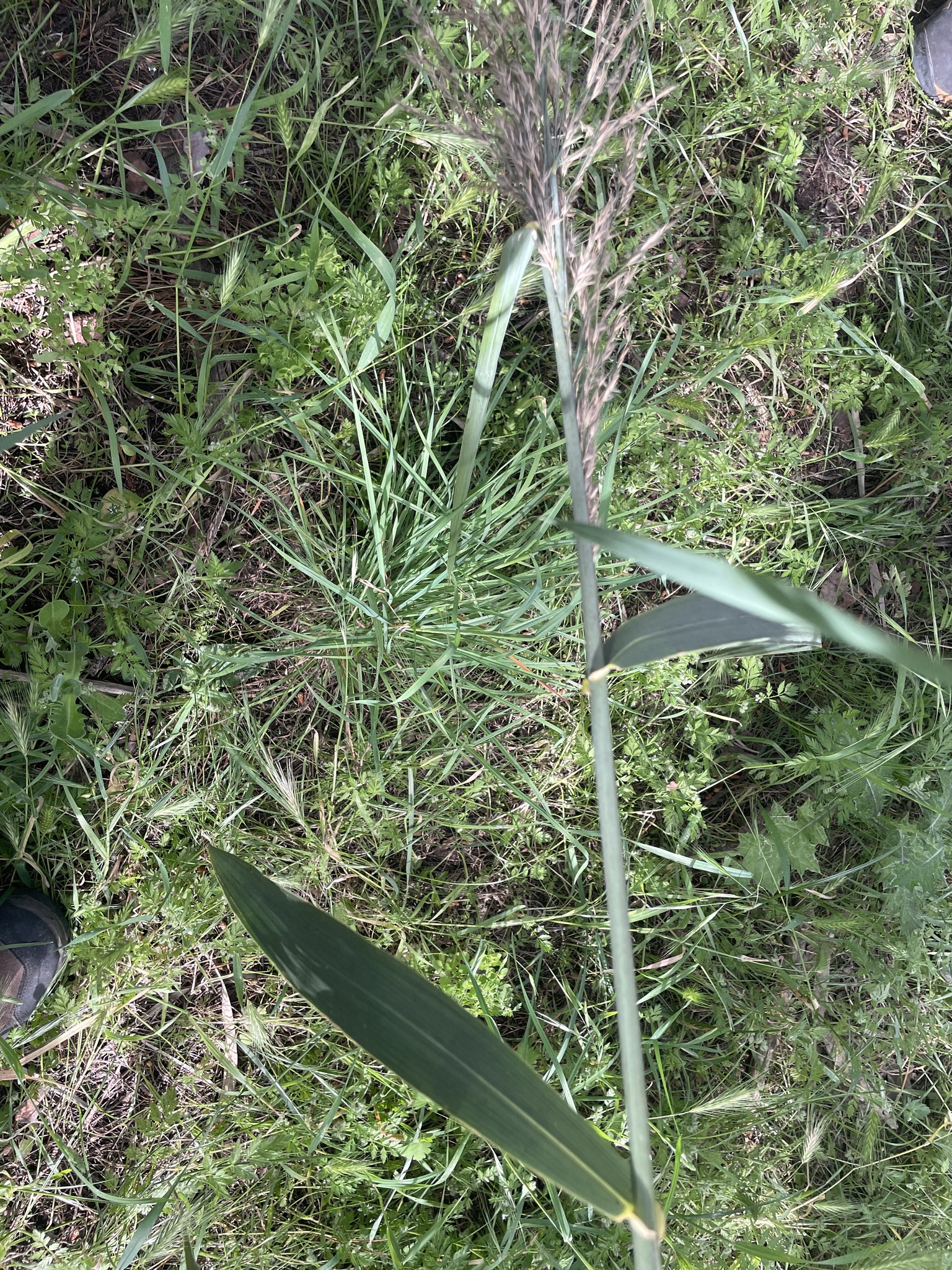
Giant reed (Arundo donaciformis)
Care, watering, light and tips for Giant reed on Floravia.
Quick facts
- Family: Poaceae
- Difficulty: Easy to care for
- Watering: every 7 days
- Light: Partial shade
- Temperature: 10–30 °C
- Toxicity: Toxic to pets
About Giant reed
Arundo donaciformis, also known as Pliny's false cane, is a towering perennial grass, bamboo-like in appearance, forming large clumps of stout stems and long, lance-shaped leaves. It can reach several meters in height, creating a natural screen or a dramatic focal point in large gardens, near water features, or in Mediterranean-style landscapes. Its rapid growth and elegant habit make it ideal for adding verticality and movement.
Native range
Mediterranean region (Europe, Asia, and North Africa)
Care tips
This species thrives in full sun and moist, well-drained soils, tolerating a wide range of soil types, even poor ones. It requires regular watering, especially during dry periods or in its first year of establishment, although it is quite drought-tolerant once settled. To control its spread and maintain a tidy appearance, it is recommended to cut back dry stems in early spring. A common mistake is planting it in small spaces, as its size and tendency to spread can become unmanageable.
How to save a dying Giant reed
- Warning signs
- Yellowish or brown, wilted, lifeless leaves. Soft or dry stems.
- First aid
- Check watering; if dry, water deeply. If waterlogged, aerate soil or repot. Provide direct sunlight.
- What kills it
- Lack of direct sunlight or constant waterlogging. It doesn't tolerate deep shade or prolonged drought.
- Can it be saved?
- Yes! It's very resilient. With sun and good drainage, it recovers. Prune damaged parts to stimulate new growth.