Marsh horsetail (Equisetum palustre)
Care, watering, light and tips for Marsh horsetail on Floravia.
Quick facts
- Family: Equisetaceae
- Difficulty: Moderate care
- Watering: every 3 days
- Light: Partial shade
- Temperature: 10–30 °C
- Toxicity: Toxic to pets
About Marsh horsetail
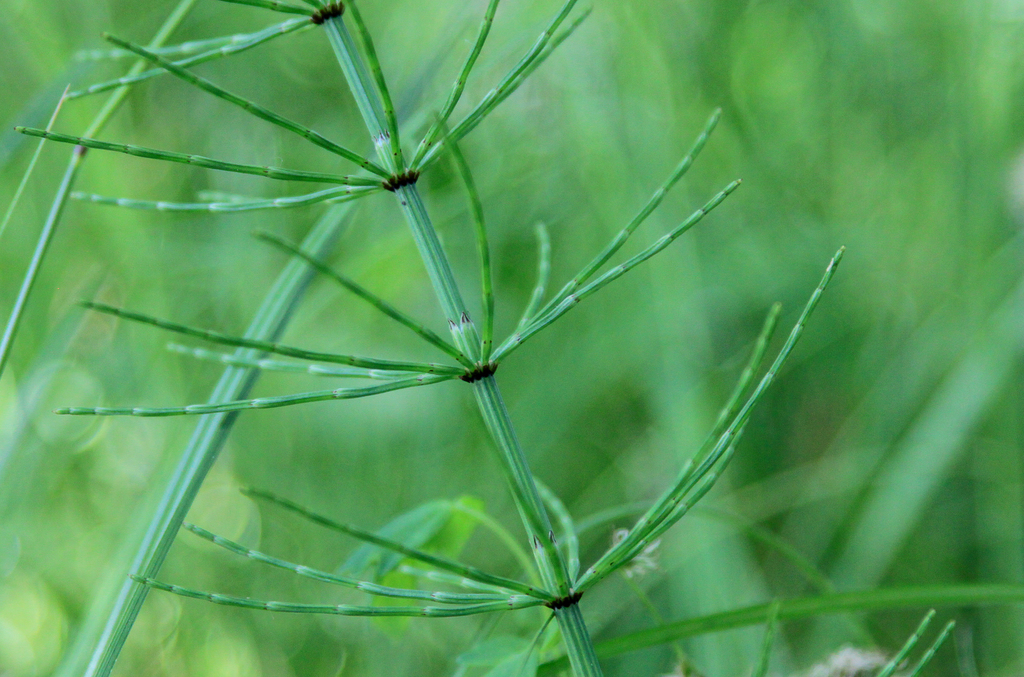
Equisetum palustre, commonly known as marsh horsetail, is a perennial aquatic or semi-aquatic plant characterized by its hollow, segmented stems without true leaves, resembling small bamboo canes. With a primitive and elegant appearance, it is ideal for ponds, water margins, or wet garden areas, providing unique texture and a natural touch. Its upright habit and intense green color make it an excellent structural element in aquatic landscapes.
Native range
Temperate and boreal regions of the Northern Hemisphere
Care tips
This species thrives in full sun or partial shade and requires consistently moist soil or even submersion in a few inches of water. It is crucial to keep the substrate saturated with water, as it does not tolerate drought; a substrate rich in organic matter will benefit it. A common mistake is planting it in dry or insufficiently moist soils, which will lead to its rapid decline.
How to save a dying Marsh horsetail
- Warning signs
- Yellowish or brown, soft, rotting stems. Loss of turgor.
- First aid
- Check substrate. If waterlogged, remove excess water. Ensure good drainage.
- What kills it
- Complete drying out, or more commonly, lack of drainage and constant waterlogging.
- Can it be saved?
- Yes, if roots are not completely rotted. Requires quick action.