Cardamine bonariensis
Care, watering, light and tips for Cardamine bonariensis on Floravia.
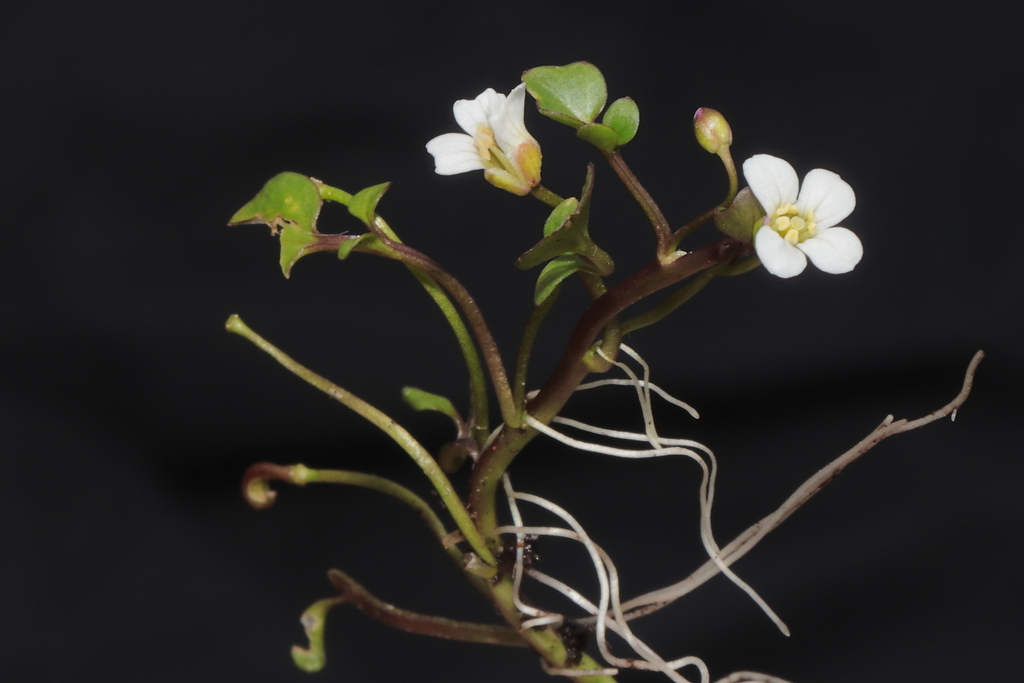
Quick facts
- Family: Brassicaceae
- Difficulty: Easy to care for
- Watering: every 7 days
- Light: Partial shade
- Temperature: 10–30 °C
About Cardamine bonariensis
Cardamine bonariensis, commonly known as bittercress, is an annual or biennial herb belonging to the Brassicaceae family, characterized by its small white four-petaled flowers and pinnate leaves. It's a modest yet resilient plant that can form low mats in rock gardens, along paths, or as ground cover in moist, shady areas, adding a wild and natural touch. It integrates well into native landscapes or low-maintenance gardens.
Native range
South America (Argentina, Chile, Uruguay, and southern Brazil)
Care tips
It prefers partial to full shade and moist, well-drained soils enriched with organic matter. Watering should be regular to keep the substrate consistently moist, especially during dry periods, but avoid waterlogging which could lead to root rot. This is a low-maintenance plant that does not require excessive fertilization; a light compost application at the beginning of the season is usually sufficient. A common mistake to avoid is letting the soil dry out completely, which can stress the plant and reduce its flowering.
How to save a dying Cardamine bonariensis
- Warning signs
- Yellowish or whitish leaves, soft stems, general wilting, lack of flowering.
- First aid
- Check drainage and soil moisture. Move to indirect light. Remove damaged leaves and stems.
- What kills it
- Overwatering (especially in winter) or lack of humidity in summer. Also strong direct sun.
- Can it be saved?
- Yes, if you act quickly. It's quite resilient if conditions are corrected.