Hedge mustard (Sisymbrium officinale)
Care, watering, light and tips for Hedge mustard on Floravia.
Quick facts
- Family: Brassicaceae
- Difficulty: Easy to care for
- Watering: every 7 days
- Light: Partial shade
- Temperature: 10–30 °C
About Hedge mustard
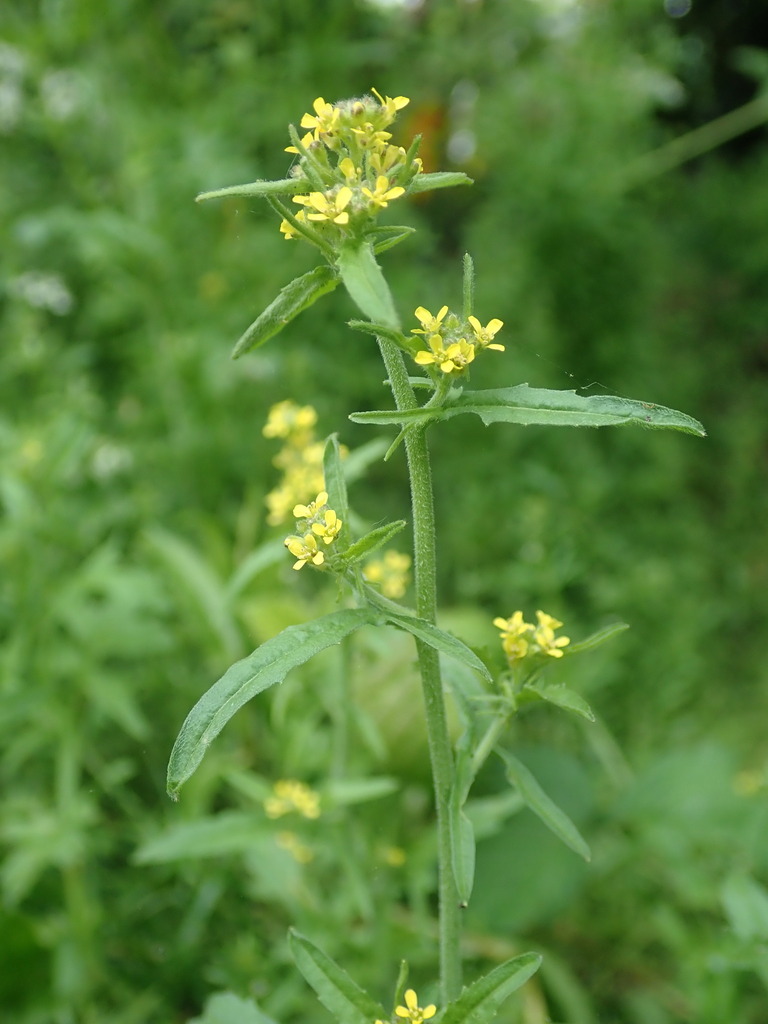
Sisymbrium officinale, commonly known as Hedge Mustard, is an annual or biennial plant belonging to the Brassicaceae family. It grows 30-80 cm tall, featuring branched stems and small yellow flowers clustered in racemes. This plant is an excellent choice for wild gardens, roadside verges, or as a pioneer plant in disturbed soils.
Native range
Europe, North Africa, and Western Asia
Care tips
Hedge Mustard is a very hardy and low-maintenance plant. It thrives in full sun to partial shade and prefers well-drained soils, even poor or calcareous ones. Watering should be moderate; it tolerates drought well once established. A common mistake is trying to cultivate it in overly rich and moist soils, which can lead to excessive growth and less flowering.
How to save a dying Hedge mustard
- Warning signs
- Yellowish or whitish leaves, flaccid stem or rot at the base, lack of flowering.
- First aid
- Check drainage. If potted, repot to one with good drainage and light substrate. Prune affected stems. Water only when soil is dry to the touch.
- What kills it
- Overwatering and compacted soil. Sisymbrium needs good drainage and doesn't tolerate waterlogging.
- Can it be saved?
- Yes, if you act quickly. If the stem isn't completely rotted and healthy leaves remain, there's hope.