Scurvygrass (Cochlearia officinalis)
Care, watering, light and tips for Scurvygrass on Floravia.
Quick facts
- Family: Brassicaceae
- Difficulty: Moderate care
- Watering: every 7 days
- Light: Partial shade
- Temperature: 10–30 °C
About Scurvygrass
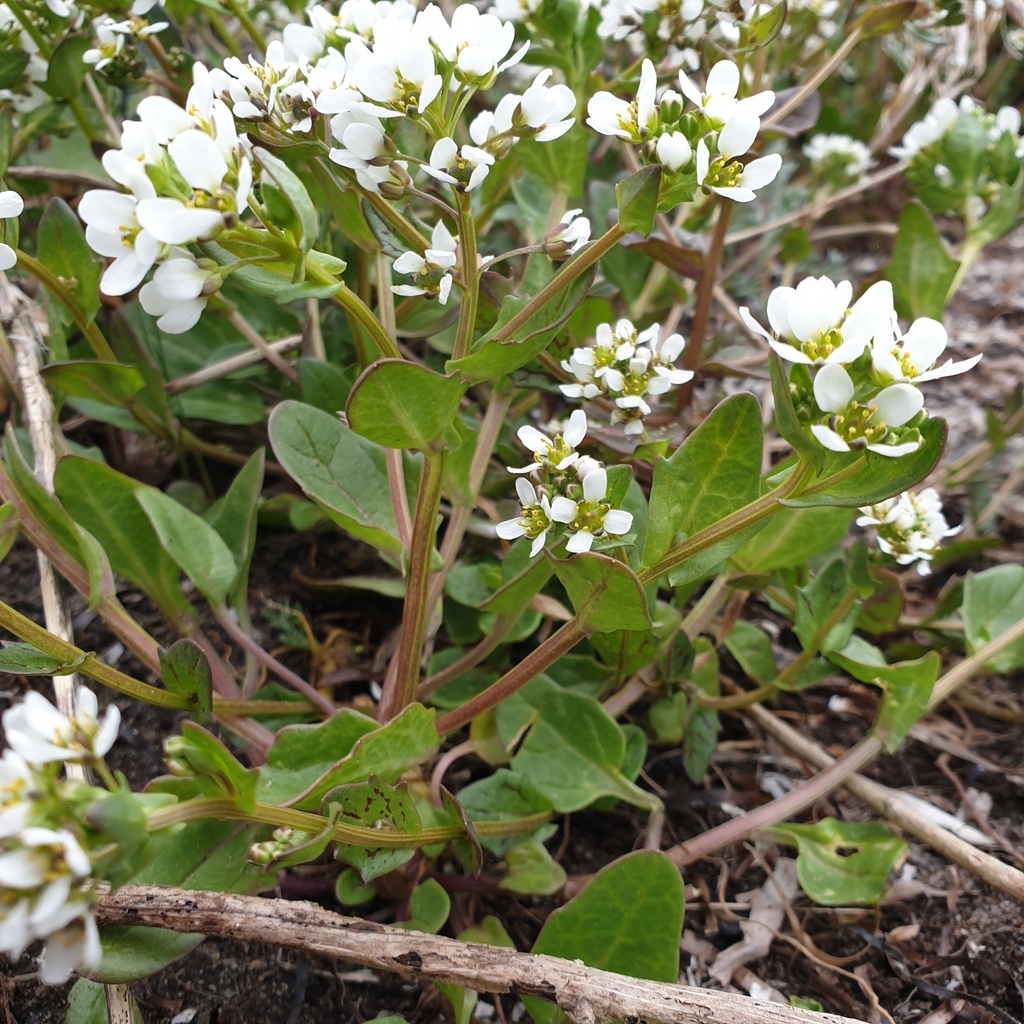
Cochlearia officinalis, commonly known as scurvy-grass, is a small perennial herbaceous plant belonging to the Brassicaceae family, valued for its round, fleshy leaves. It forms compact clumps of dark green leaves that can turn reddish in cold climates. It is ideal for rock gardens, herb gardens, or as ground cover in cool, moist areas, where its vibrant foliage adds interest.
Native range
Rocky and saline coasts of the North Atlantic, from Western Europe (including Scandinavia and the British Isles) to northeastern North America and Greenland
Care tips
It prefers full sun to light partial shade and moist, well-drained soils rich in organic matter. Watering should be regular, keeping the substrate consistently moist, especially during dry periods, but avoiding waterlogging. It thrives in cool climates and is quite cold-hardy. A common mistake is planting it in dry or excessively hot soils, which can stress the plant and reduce its vitality.
How to save a dying Scurvygrass
- Warning signs
- Pale or yellowing leaves, soft and drooping stems, stunted growth. A moldy smell may indicate overwatering.
- First aid
- Check drainage and soil moisture. Repot to a well-draining pot if soil is waterlogged or compacted. Ensure good air circulation.
- What kills it
- Overwatering and poor drainage lead to root rot. Also, prolonged exposure to very high or very low temperatures.
- Can it be saved?
- Yes, if roots aren't completely rotted and the issue is caught early. Soil change and controlled watering are key.