Dittander (Lepidium latifolium)
Care, watering, light and tips for Dittander on Floravia.
Quick facts
- Family: Brassicaceae
- Difficulty: Easy to care for
- Watering: every 7 days
- Light: Partial shade
- Temperature: 10–30 °C
About Dittander
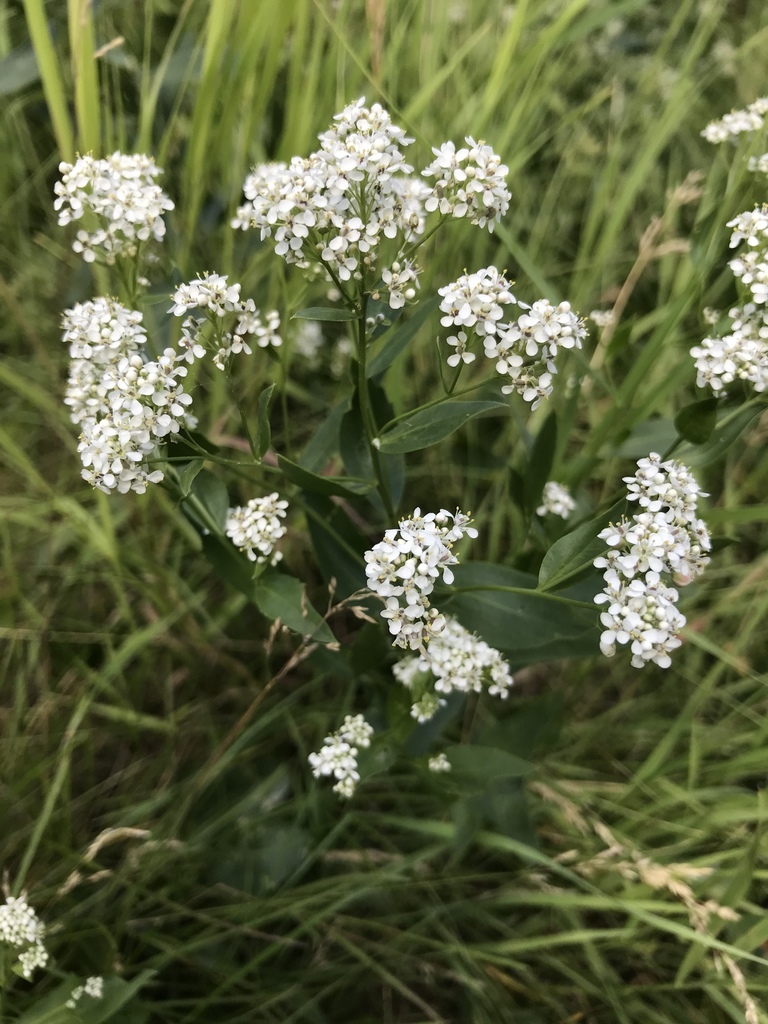
Lepidium latifolium, commonly known as broadleaf pepperweed or strandkarse, is a perennial herbaceous plant from the Brassicaceae family, characterized by its intense green, lance-shaped leaves and small white flowers clustered in racemes. This robust species can reach considerable heights, making it ideal for wild gardens, roadside borders, or as ground cover in areas where a natural and resilient look is desired. Its presence adds a rustic touch and can be useful for soil stabilization.
Native range
Europe, Asia, and North Africa
Care tips
It prefers full sun to partial shade and tolerates a wide range of soils, though it favors moist, well-drained ones; it is notably salt-tolerant. Watering should be moderate, allowing the substrate to dry slightly between waterings, although it can withstand drought periods once established. A common mistake is underestimating its vigor, as it can become invasive if not managed, so monitoring its spread is recommended. It does not require excessive fertilization, adapting well to poor conditions.
How to save a dying Dittander
- Warning signs
- Wilted, yellowed or spotted leaves, stunted growth, soft stems. May indicate water stress or nutrient deficiency.
- First aid
- Check soil moisture. If dry, water deeply. If waterlogged, aerate roots and reduce watering. Ensure good drainage.
- What kills it
- Constant overwatering, which rots its roots. Or prolonged drought, as it's a water-loving plant.
- Can it be saved?
- Yes, if roots are not completely rotted. Act quickly by correcting watering and location.