Chilean bellflower (Lapageria rosea)
Care, watering, light and tips for Chilean bellflower on Floravia.
Quick facts
- Family: Philesiaceae
- Difficulty: Demanding
- Watering: every 3 days
- Light: Partial shade
- Temperature: 10–30 °C
About Chilean bellflower
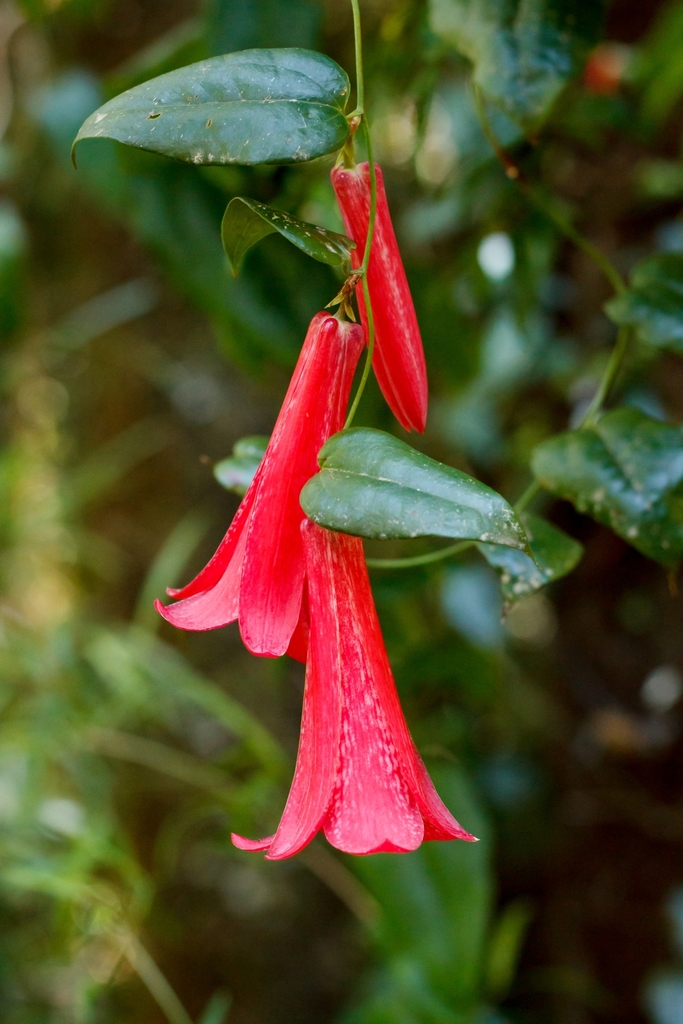
Lapageria rosea, commonly known as the Chilean Bellflower or Copihue, is Chile's national flower, a slow-growing perennial vine of exceptional beauty. Its large, bell-shaped flowers, ranging from deep pink to crimson red, hang gracefully, creating a stunning visual display. It is ideal for pergolas, walls, or as an ornamental climbing plant in shady, cool gardens.
Native range
Temperate forests of Chile
Care tips
It requires partial to full shade, avoiding intense direct sunlight, and an acidic soil, rich in organic matter, well-drained, and consistently moist. Watering should be regular, keeping the substrate moist but not waterlogged, especially in summer. A common mistake is exposure to high temperatures and dry air, which can lead to bud and flower drop. Protect from severe frosts.
How to save a dying Chilean bellflower
- Warning signs
- Yellowing or browning leaves, wilting, lack of flowering, stunted growth. Often indicates soil, watering, or humidity stress.
- First aid
- Check substrate moisture. If dry, water deeply with lime-free water. If waterlogged, repot with fresh substrate and ensure good drainage. Increase ambient humidity.
- What kills it
- Alkaline soil, lack of humidity, direct sun, or waterlogging. It's acid-loving and needs partial shade and constant moisture.
- Can it be saved?
- Yes, it's resilient. Act quickly by correcting soil pH, improving drainage, and providing adequate humidity and shade. Pruning dead parts helps.