Queen's tears (Billbergia nutans)
Care, watering, light and tips for Queen's tears on Floravia.
Quick facts
- Family: Bromeliaceae
- Difficulty: Easy to care for
- Watering: every 7 days
- Light: Indirect light
- Temperature: 15–32 °C
About Queen's tears
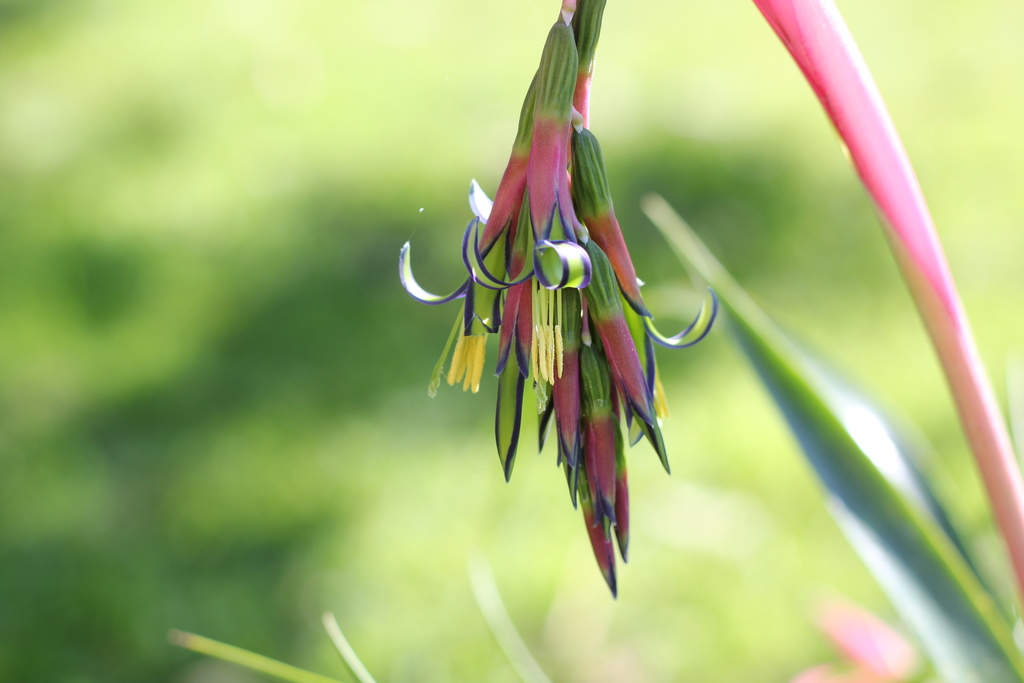
Billbergia nutans, commonly known as Queen's-Tears, is an epiphytic bromeliad native to South America, renowned for its striking pendulous inflorescences of pink, green, and blue, resembling tiny tears. Its leaves are elongated, narrow, and serrated, forming a rosette that collects water. It is ideal for hanging baskets or as an indoor plant in a bright location where its unique flowers can be admired.
Native range
Brazil, Uruguay, Paraguay, and Argentina
Care tips
It requires bright, indirect light; intense direct sunlight can scorch its leaves. Water it by filling the central "tank" of the rosette with rainwater or distilled water, emptying and refilling it every few weeks to prevent stagnation. The substrate should be light and well-draining, such as an orchid or bromeliad mix, and kept consistently moist but never waterlogged. A common mistake is to only water the substrate, neglecting to fill the central "tank" which is essential for its hydration.
How to save a dying Queen's tears
- Warning signs
- Soft, yellowing or browning leaves from the base. Dry, crispy tips indicate thirst.
- First aid
- If base is soft and smells bad, cut affected parts. If dry, submerge in filtered water.
- What kills it
- Overwatering (rots the base) or lack of ambient humidity, especially indoors.
- Can it be saved?
- Yes, if the base isn't completely rotted or healthy pups remain; they are very resilient.