Atlas cedar (Cedrus atlantica)
Care, watering, light and tips for Atlas cedar on Floravia.
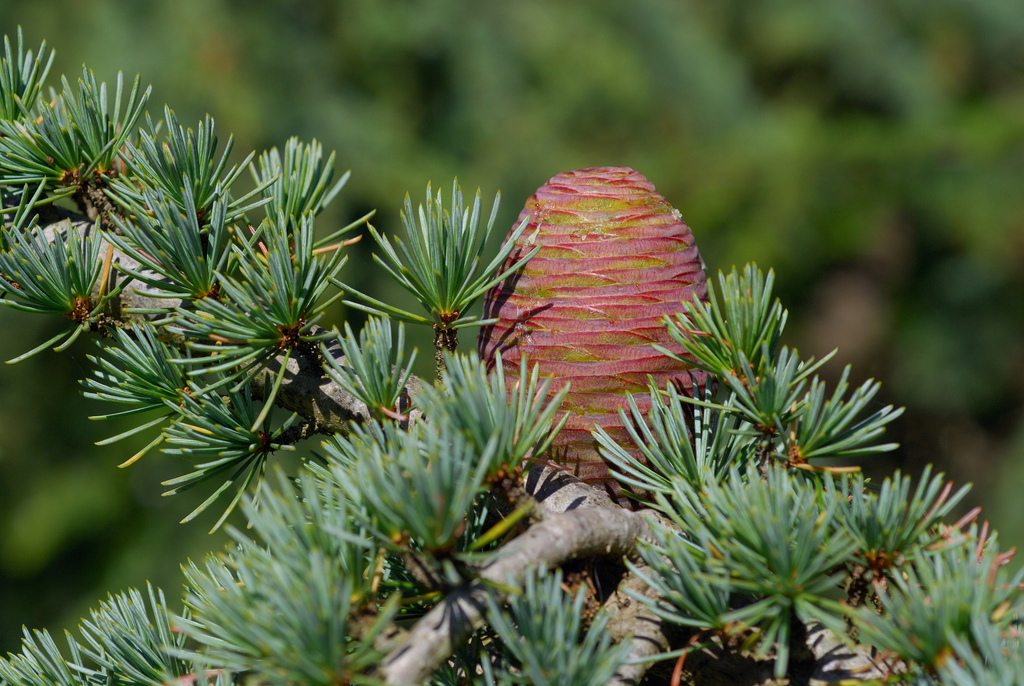
Quick facts
- Family: Pinaceae
- Difficulty: Moderate care
- Watering: every 7 days
- Light: Full sun
- Temperature: -20–30 °C
- Toxicity: Toxic to pets
About Atlas cedar
The Atlas Cedar (Cedrus atlantica) is a majestic coniferous tree native to the Atlas Mountains of North Africa, known for its conical or pyramidal habit that broadens and spreads with age. Its blue-green needles, often with a silvery cast, give it a distinctive beauty that makes it ideal as a solitary ornamental tree in large gardens, parks, or avenues. Its imposing presence and unique coloration make it a spectacular focal point in any landscape.
Native range
Atlas Mountains in North Africa (Morocco and Algeria)
Care tips
It thrives in full sun exposure for optimal growth and intense needle coloration. Although it tolerates poor soils, it performs best in well-drained, slightly acidic to neutral substrates; it is crucial to avoid waterlogging, as it is sensitive to excessive moisture at the roots. Once established, it is quite drought-tolerant, so watering should be moderate, especially for young specimens or during prolonged dry spells. A common mistake is planting it in heavy, poorly drained soils, which can lead to fungal diseases.
How to save a dying Atlas cedar
- Warning signs
- Brown needles dropping massively, loss of vigor, dry and brittle tips.
- First aid
- Check drainage, ensure constant moisture but no waterlogging, protect from strong winds and intense direct sun.
- What kills it
- Prolonged drought in juvenile stage or overwatering leading to root rot. Compacted soil.
- Can it be saved?
- Yes, if roots are not too damaged and action is taken promptly with proper water and substrate management.