Japanese white pine (Pinus parviflora)
Care, watering, light and tips for Japanese white pine on Floravia.
Quick facts
- Family: Pinaceae
- Difficulty: Demanding
- Watering: every 7 days
- Light: Full sun
- Temperature: -20–30 °C
About Japanese white pine
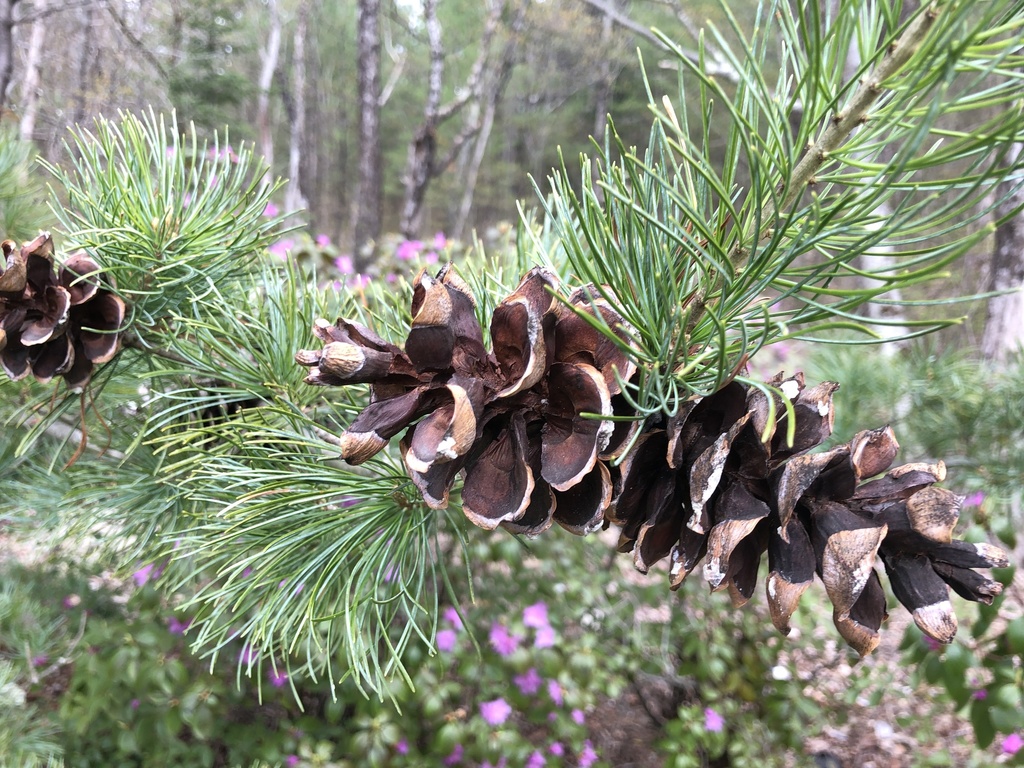
Pinus parviflora, also known as Japanese White Pine or Five-needle Pine, is a majestic, slow-growing conifer with a pyramidal shape that matures into a broad, sculptural crown. Its soft, blue-green needles, arranged in bundles of five, give it a delicate texture and exceptional visual appeal. It is ideal as a specimen plant in Japanese-style gardens, as a bonsai, or as part of a rock garden.
Native range
Japan, Korea, and eastern Russia
Care tips
This pine requires full sun for optimal growth and well-drained, slightly acidic to neutral soil. Watering should be moderate, allowing the substrate to dry out slightly between waterings, and it's crucial to avoid waterlogging, especially in winter. A common mistake is over-pruning or pruning at the wrong time, which can weaken the plant; it's best to perform light pruning to maintain shape and remove dead branches. Protect young roots from severe frosts in very cold climates.
How to save a dying Japanese white pine
- Warning signs
- Yellowish/brown needles, dry tips, slow growth, excessive resin, bare branches.
- First aid
- Check drainage/moisture, prune dead branches, apply fungicide if fungal, consider transplant to suitable spot.
- What kills it
- Overwatering (root rot), poor drainage, alkaline soil, extreme water stress, untreated pests/diseases.
- Can it be saved?
- Yes, if roots aren't completely rotted and action is swift. Requires patience and continuous care.