Common bulrush (Typha latifolia)
Care, watering, light and tips for Common bulrush on Floravia.
Quick facts
- Family: Typhaceae
- Difficulty: Easy to care for
- Watering: every 7 days
- Light: Partial shade
- Temperature: 10–30 °C
About Common bulrush
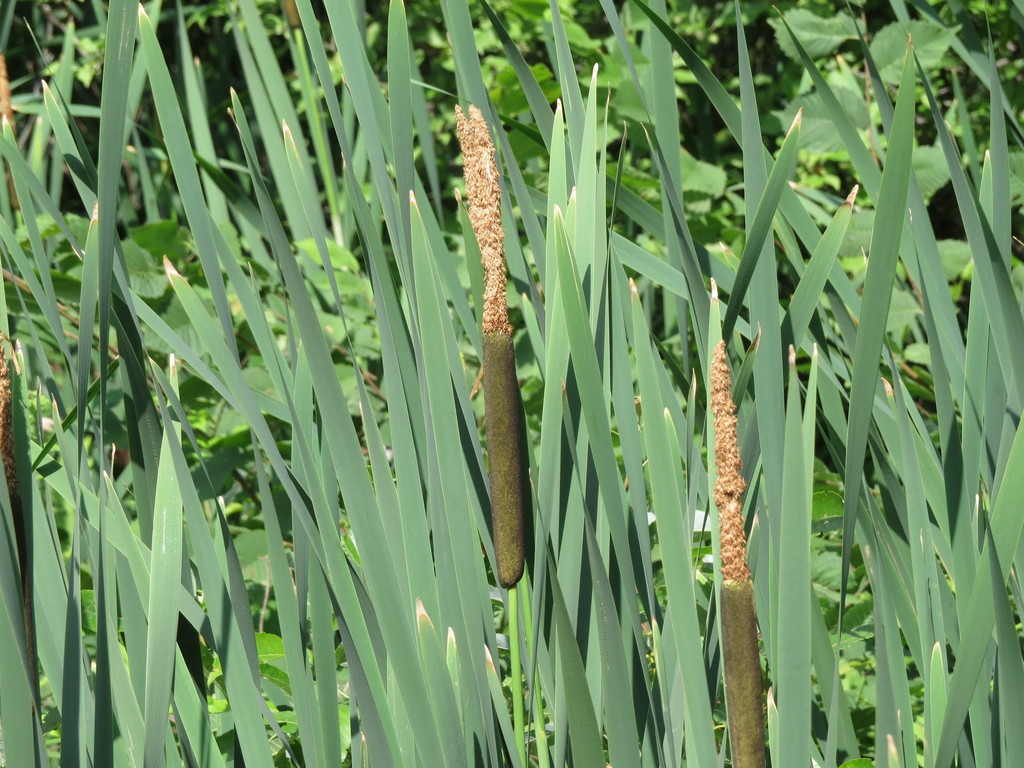
Typha latifolia, commonly known as broadleaf cattail or bulrush, is a robust perennial aquatic plant, characterized by its long, sword-shaped leaves and distinctive velvety brown cylindrical flower spikes. It is ideal for ponds, wetlands, or shallow water areas, adding a natural and vertical touch to the landscape. Its presence is ornamental and provides shelter for aquatic wildlife.
Native range
Widely distributed in the Northern Hemisphere, including North America, Europe, and Asia.
Care tips
This plant thrives in full sun to partial shade, requiring at least 6 hours of direct sunlight for optimal growth. It needs to be planted in permanently moist soil or submerged in up to 30 cm of water, with a substrate rich in organic matter. It is essential to control its spread, as it can become invasive in suitable environments; planting it in submerged containers is recommended to limit its expansion. Avoid drying out the substrate, as it is a wetland plant and does not tolerate dryness.
How to save a dying Common bulrush
- Warning signs
- Yellowing/browning leaves from the base, soft stems, lack of growth in water.
- First aid
- Ensure roots are submerged and water level is constant. Remove dead foliage. Check water quality.
- What kills it
- Prolonged drought or drastic water level fluctuations. Water pollution or excess nutrients.
- Can it be saved?
- Yes, if roots are still firm and the rhizome isn't rotted. Act quickly to restore its aquatic environment.