Southern cattail (Typha domingensis)
Care, watering, light and tips for Southern cattail on Floravia.
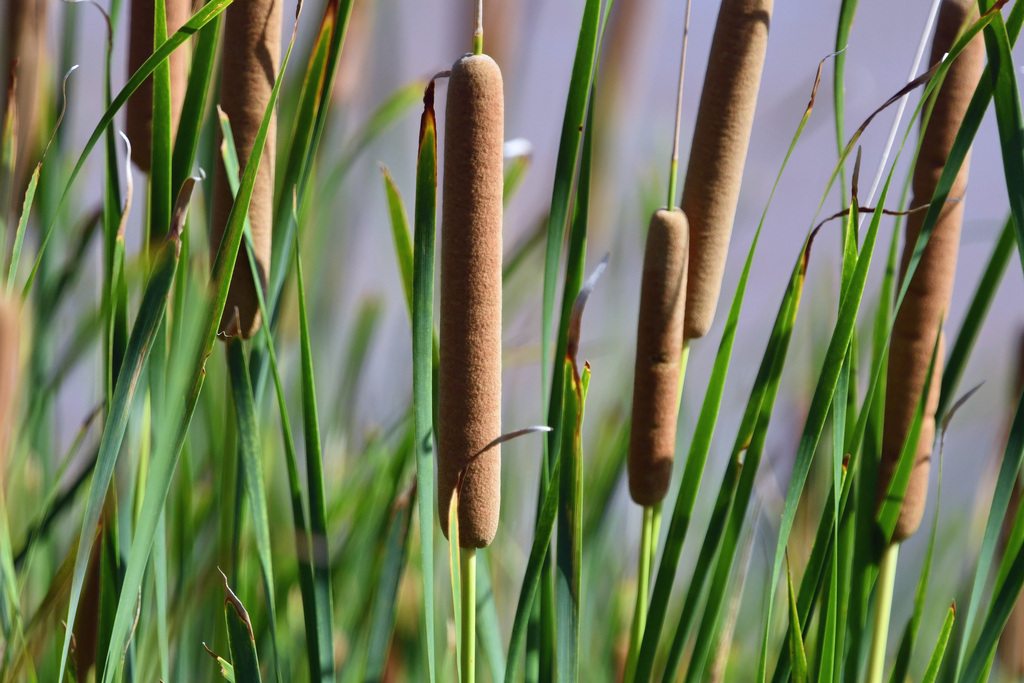
Quick facts
- Family: Typhaceae
- Difficulty: Easy to care for
- Watering: every 2 days
- Light: Partial shade
- Temperature: 10–30 °C
About Southern cattail
Typha domingensis, commonly known as "Southern Cattail", is a perennial aquatic plant that forms dense colonies in wetlands and along the edges of water bodies. It is characterized by its tall, robust stems, which can reach several meters in height, topped by distinctive cylindrical brown flower spikes. It is ideal for large ponds, natural water gardens, and wetland restoration projects, providing a rustic aesthetic and serving as a refuge for wildlife.
Native range
Americas, Africa, Eurasia and Australia
Care tips
It requires full sun for optimal growth and thrives in permanently wet or submerged soils up to 30-60 cm (1-2 feet) deep. It does not need additional fertilization in most natural environments, as it draws nutrients from the water. It is crucial to control its spread, as it can become invasive in enclosed systems; pruning the inflorescences before seed maturation can help limit its propagation.
How to save a dying Southern cattail
- Warning signs
- Yellowish or brown, soft, drooping leaves; lack of vigorous growth.
- First aid
- Ensure constant water, ideally with roots submerged. Check water quality and nutrients.
- What kills it
- Prolonged drought or lack of water, as it's an aquatic plant. Also, too much shade.
- Can it be saved?
- Yes, if water deficiency is corrected and it gets enough light. It's very resilient.