Broadleaf cattail (Typha glauca)
Care, watering, light and tips for Broadleaf cattail on Floravia.
Quick facts
- Family: Typhaceae
- Difficulty: Easy to care for
- Watering: every 7 days
- Light: Partial shade
- Temperature: 10–30 °C
About Broadleaf cattail
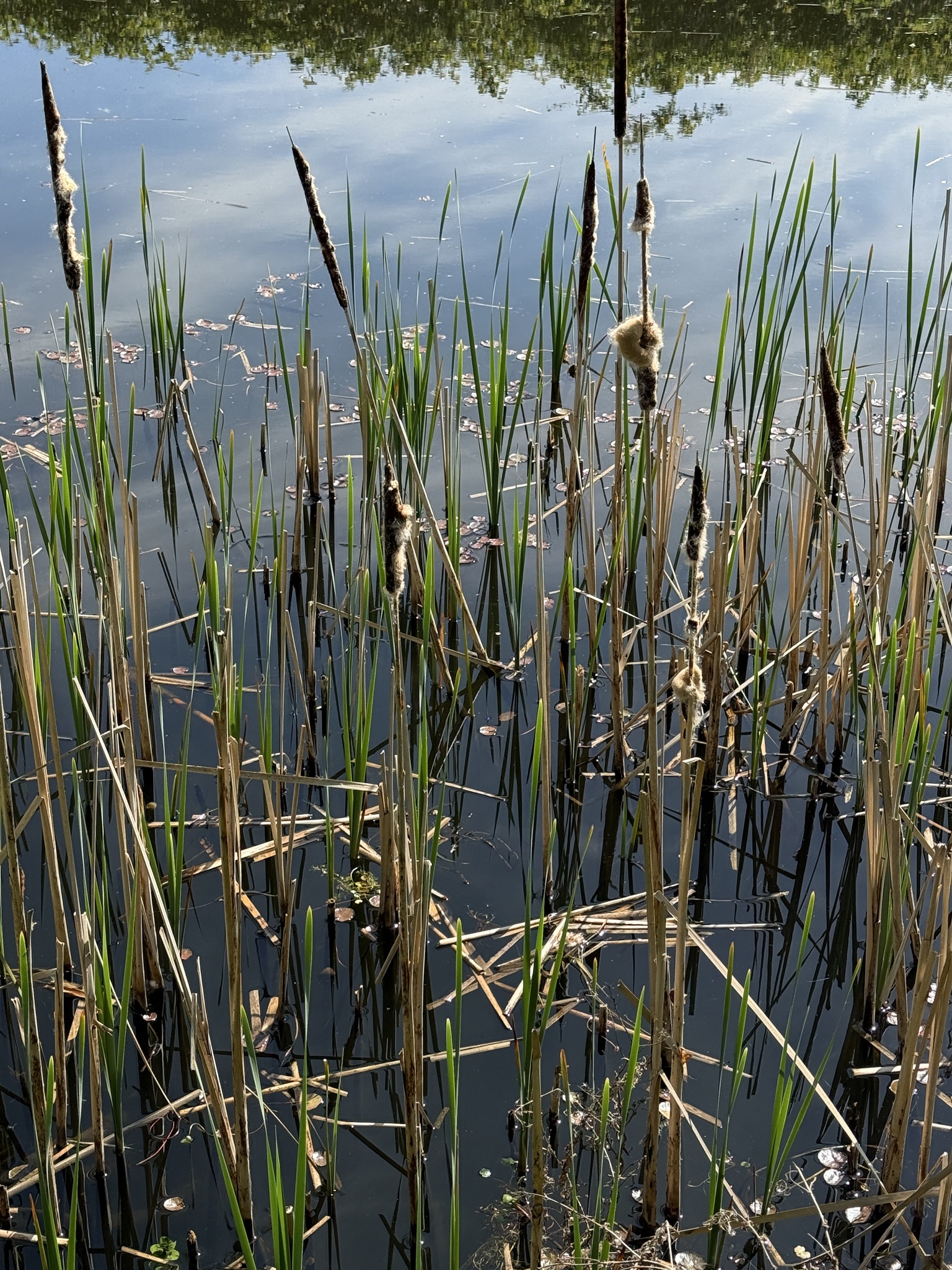
Typha glauca, commonly known as White Cattail, is a robust perennial aquatic plant, a hybrid of T. latifolia and T. angustifolia, characterized by its distinctive cylindrical flower spikes and bluish-green linear foliage. It grows to significant heights, creating a striking visual effect at the edges of ponds, wetlands, or water gardens, and is excellent for bank stabilization. Its inflorescences, which mature to a velvety brown, are highly valued in dried flower arrangements.
Native range
North America and Eurasia
Care tips
This plant thrives in full sun in consistently wet soil or submerged in up to 30 cm of water. It does not require regular fertilization and tolerates a wide range of soil conditions, provided there is constant moisture. It is crucial to control its spread, as it can become invasive in favorable environments; physical containment or regular rhizome pruning are recommended. A common mistake to avoid is planting it in an unrestricted space, where its vigorous growth could displace other species.
How to save a dying Broadleaf cattail
- Warning signs
- Yellowish or brown, soft leaves, drooping stems. Absence of new catkins or deformed catkins.
- First aid
- Check water level; Typha glauca must always be in water. If water is stagnant and smells, change it. Ensure full sun exposure.
- What kills it
- Drying out completely or poor, nutrient-deficient substrate. Lack of direct sunlight also weakens it.
- Can it be saved?
- Yes, if its rhizomes are still firm and not completely rotted. Requires patience and optimal aquatic conditions.