Shining cranesbill (Geranium lucidum)
Care, watering, light and tips for Shining cranesbill on Floravia.
Quick facts
- Family: Geraniaceae
- Difficulty: Easy to care for
- Watering: every 7 days
- Light: Partial shade
- Temperature: 10–30 °C
- Toxicity: Toxic to pets
About Shining cranesbill
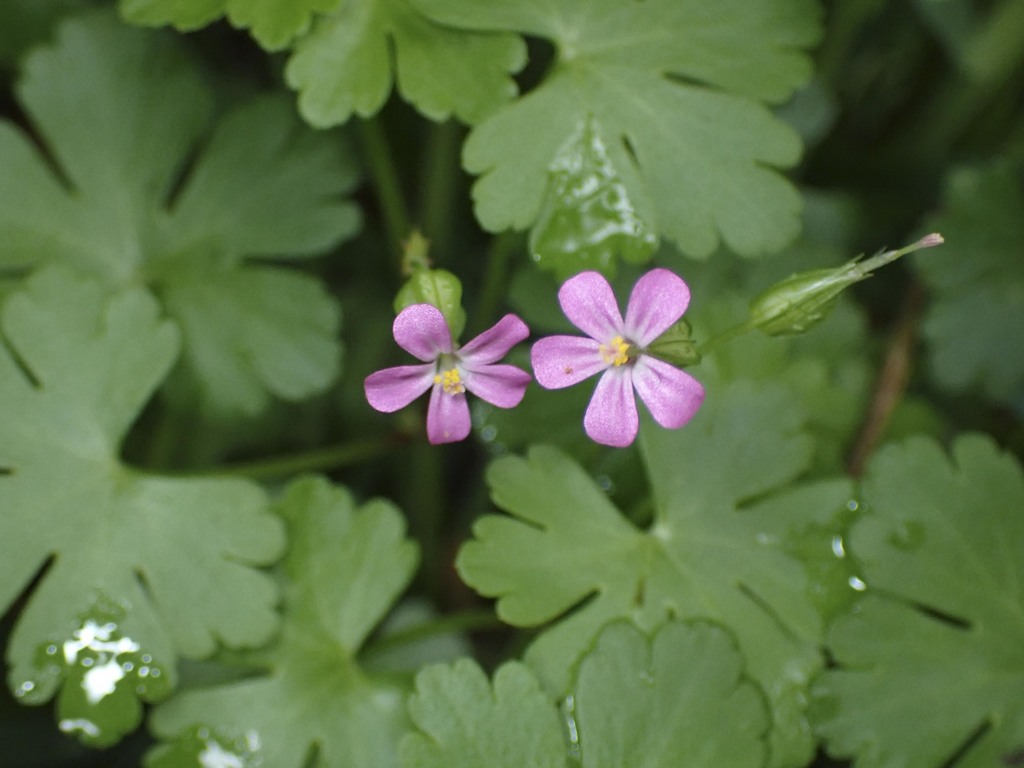
Geranium lucidum, commonly known as shining cranesbill or shining geranium, is a small annual or biennial plant belonging to the Geraniaceae family, distinguished by its glossy leaves and reddish stems and foliage, especially when exposed to strong sunlight. Its small, pinkish-purple flowers add a delicate touch. It is ideal for rock gardens, path edges, or as an understory plant in naturalistic gardens, where its sheen can stand out.
Native range
Europe and Western Asia
Care tips
It prefers locations with partial shade or filtered light, though it can tolerate some direct sun if the soil is kept moist. Watering should be regular, keeping the substrate consistently moist but well-drained, avoiding waterlogging. It adapts to a wide range of soils but prefers those rich in organic matter and with good drainage. A common mistake is allowing the soil to dry out completely, which can stress the plant and reduce its flowering.
How to save a dying Shining cranesbill
- Warning signs
- Reddish or yellowing, wilted leaves, stunted growth. Shiny geraniums are hardy, so these are serious issues.
- First aid
- Check drainage and soil moisture. If waterlogged, remove the plant and let roots dry. If very dry, water gently.
- What kills it
- Overwatering and poor drainage. Its roots are sensitive to waterlogging, leading to rapid rot.
- Can it be saved?
- Yes, often. If roots aren't completely rotted, you can recover it. Act quickly when you see stress signals.