Grey cranesbill (Geranium cinereum)
Care, watering, light and tips for Grey cranesbill on Floravia.
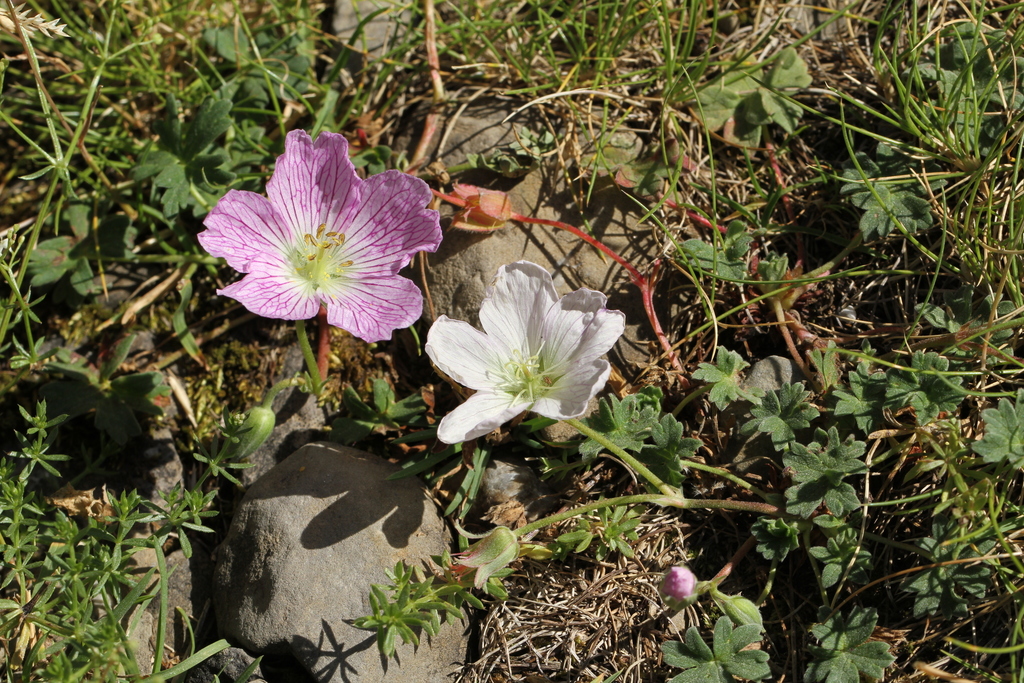
Quick facts
- Family: Geraniaceae
- Difficulty: Easy to care for
- Watering: every 7 days
- Light: Partial shade
- Temperature: 10–30 °C
- Toxicity: Toxic to pets
About Grey cranesbill
Geranium cinereum, commonly known as silkesnäva, is a low-growing perennial native to the mountains of Southern Europe. It is characterized by its delicate pink, purple, or white flowers, often with darker veins, blooming from late spring well into summer. Its compact habit and grey-green lobed foliage make it ideal for rock gardens, garden borders, or as ground cover in sunny areas.
Native range
Mountains of Southern Europe, especially the Pyrenees
Care tips
It prefers a location in full sun or light partial shade and well-drained, sandy or stony soil, as it is susceptible to waterlogging. Watering should be moderate, allowing the substrate to dry out between waterings, especially in winter to prevent root rot. A common mistake is planting it in heavy or clay soils, which compromises its health; ensure to improve drainage if your soil is not suitable. It is a resilient plant once established and does not require much fertilization.
How to save a dying Grey cranesbill
- Warning signs
- Yellowish/whitish leaves, soft and blackened stems, no blooms.
- First aid
- Repot in well-draining soil, reduce watering, place in partial shade.
- What kills it
- Overwatering and poor drainage, leading to root rot.
- Can it be saved?
- Yes, if rot is not too advanced and you act quickly.