Erodium foetidum
Care, watering, light and tips for Erodium foetidum on Floravia.
Quick facts
- Family: Geraniaceae
- Difficulty: Easy to care for
- Watering: every 10 days
- Light: Partial shade
- Temperature: 10–30 °C
About Erodium foetidum
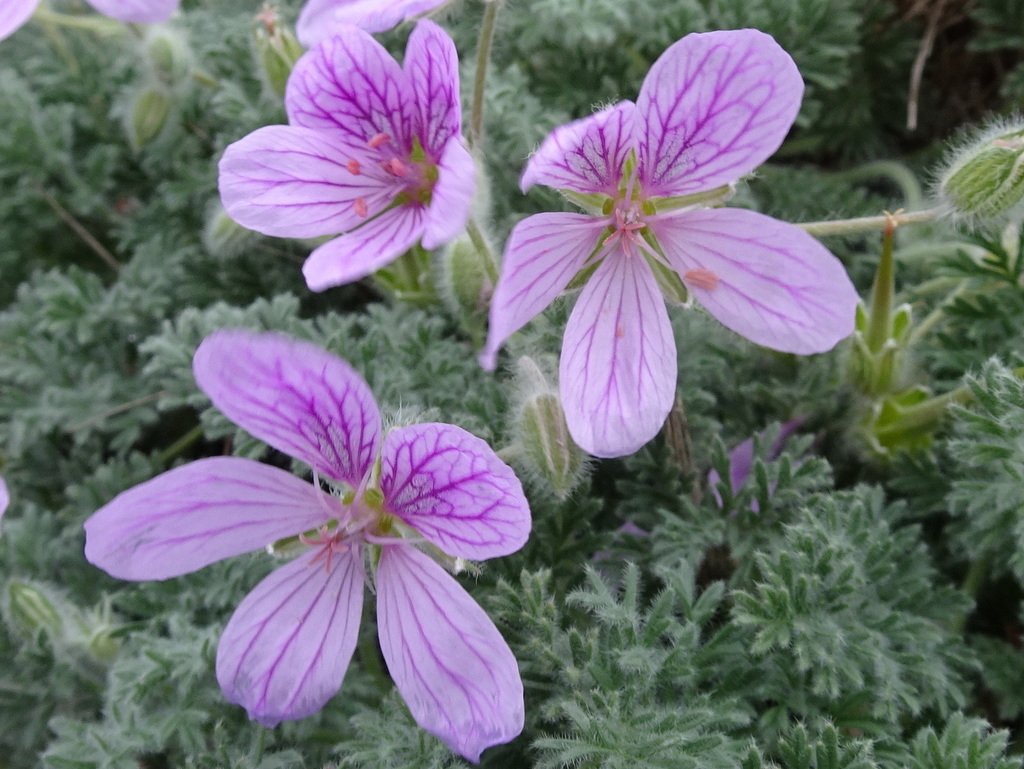
Erodium foetidum, commonly known as Stinking Cranesbill or Foul-smelling Storksbill, is a small perennial plant native to the mountainous regions of the Iberian Peninsula. It is characterized by its finely divided leaves and white to pale lilac flowers, often with darker veins, emerging from reddish stems. It is ideal for rock gardens, gravel gardens, or as a potted plant in arid climates, where its subtle beauty can be appreciated.
Native range
Iberian Peninsula and Northwest Africa
Care tips
This species thrives in full sun exposure and very well-drained, even poor and stony soils, making it highly drought-tolerant. Watering should be sparse, allowing the substrate to dry out completely between waterings; overwatering is its main enemy. It is crucial to avoid heavy or clayey soils that retain water, as this will lead to root rot. It does not require regular fertilization and tolerates light frosts well.
How to save a dying Erodium foetidum
- Warning signs
- Yellowish or brown and wilting leaves, soft or blackened stems. May smell moldy if there's excess humidity.
- First aid
- Remove damaged leaves and stems. Check substrate: if wet, stop watering and improve ventilation. If dry, water lightly.
- What kills it
- The main mistake is overwatering and poor drainage, which rots its roots. Also, intense direct sun in summer.
- Can it be saved?
- Yes, if the roots are not completely rotted. Repotting to fresh, well-draining substrate can help if rot is advanced.