Common stork's-bill (Erodium cicutarium)
Care, watering, light and tips for Common stork's-bill on Floravia.
Quick facts
- Family: Geraniaceae
- Difficulty: Easy to care for
- Watering: every 7 days
- Light: Partial shade
- Temperature: 10–30 °C
About Common stork's-bill
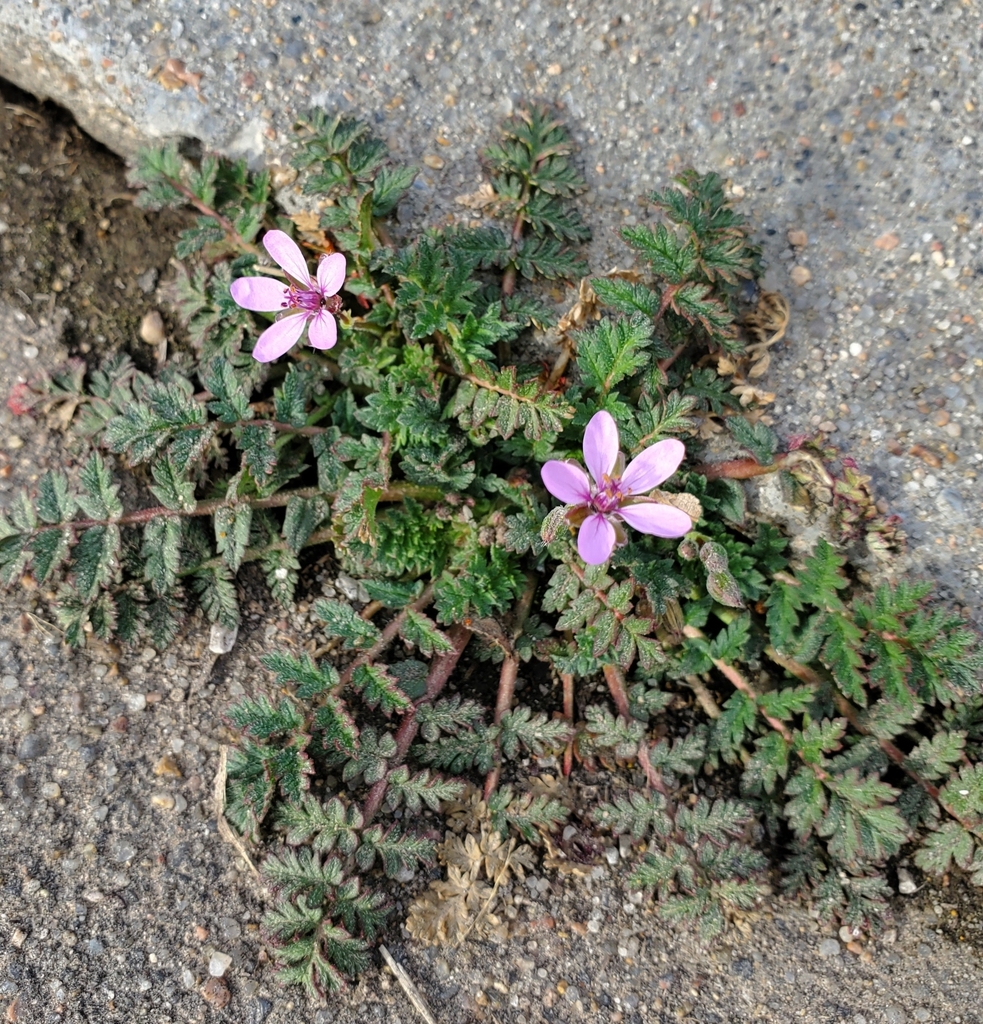
Erodium cicutarium, commonly known as Common Stork's-bill or Redstem Filaree, is a small annual or biennial herbaceous plant belonging to the Geraniaceae family, characterized by its finely divided, fern-like leaves and delicate pink or purple flowers. Its elongated, needle-shaped fruits are very distinctive. It is an excellent choice for rock gardens, path edges, or as ground cover in sunny, dry areas.
Native range
Europe, Asia, and North Africa
Care tips
This species thrives in full sun to partial shade and prefers well-drained soils, even poor or sandy ones, being very adaptable. It tolerates drought well once established, so watering should be moderate, allowing the substrate to dry out between waterings to prevent waterlogging. A common mistake is overwatering, which can lead to root rot. It does not require regular fertilization and can be easily grown from seeds.
How to save a dying Common stork's-bill
- Warning signs
- Yellow or reddish leaves, weak and drooping stems, lack of flowering. Stunted growth may occur.
- First aid
- Move to a brighter spot with indirect light. Water only when soil is dry to touch. Check drainage.
- What kills it
- Overwatering leading to root rot, or insufficient light. Does not tolerate extreme drought in pots.
- Can it be saved?
- Yes, if roots are not fully rotted and some green stems remain. It's quite resilient.