Japanese banana (Musa basjoo)
Care, watering, light and tips for Japanese banana on Floravia.
Quick facts
- Family: Musaceae
- Difficulty: Moderate care
- Watering: every 3 days
- Light: Partial shade
- Temperature: 10–30 °C
About Japanese banana
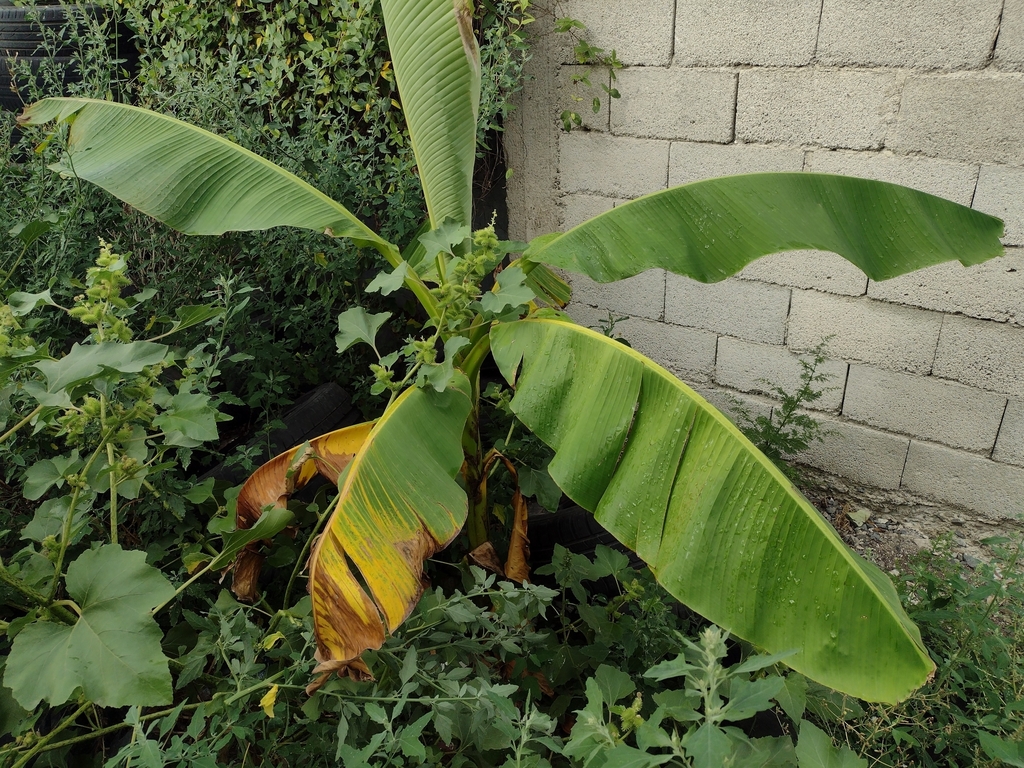
Musa basjoo, commonly known as the Japanese banana or hardy banana, is one of the most cold-tolerant banana species, making it ideal for temperate climates. Although its fruits are not edible, its large, bright green tropical foliage and rapid growth make it an impressive ornamental plant for gardens, patios, and as an exotic focal point. It creates a lush, tropical atmosphere wherever it is planted.
Native range
Sichuan, China
Care tips
It requires full sun to partial shade and abundant watering, especially during warm months, to sustain its rapid growth. The substrate should be rich in organic matter, well-draining, and consistently moist. Protect the base of the plant with a good layer of mulch in winter to help it survive frosts; a common mistake is not protecting it enough in cold climates, assuming it is completely invulnerable. Fertilize regularly in spring and summer for optimal development.
How to save a dying Japanese banana
- Warning signs
- Yellow or brown leaves drying from edges, soft or rotten stems at the base, stunted growth.
- First aid
- Check drainage and soil moisture. If potted, repot into a larger pot with good drainage. Protect from extreme cold.
- What kills it
- Overwatering, especially in winter, which rots the roots. Also, intense cold without proper protection can kill it.
- Can it be saved?
- Yes, if roots are not completely rotted or the rhizome base is firm. Act quickly by correcting watering and protecting it.