European hop-hornbeam (Ostrya carpinifolia)
Care, watering, light and tips for European hop-hornbeam on Floravia.
Quick facts
- Family: Betulaceae
- Difficulty: Moderate care
- Watering: every 7 days
- Light: Partial shade
- Temperature: 10–30 °C
About European hop-hornbeam
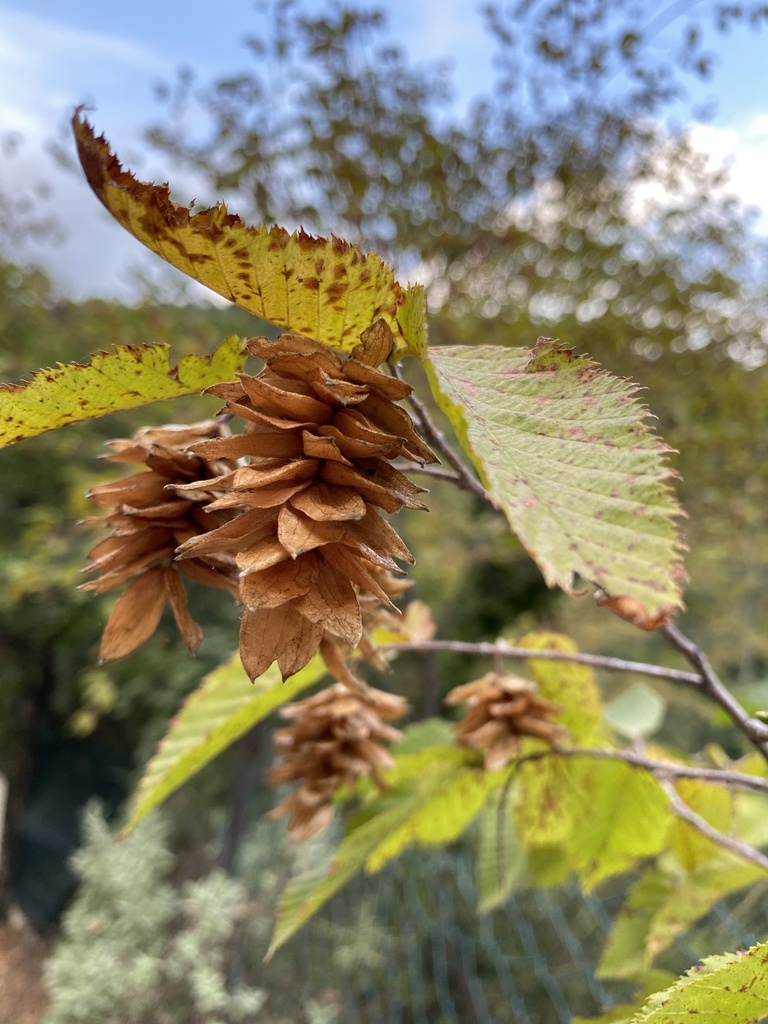
The European Hop-hornbeam (Ostrya carpinifolia) is a medium-sized deciduous tree, recognizable by its fissured bark and dense, dark green foliage that turns yellow in autumn. Its elegant habit and resilience make it ideal for parks, large gardens, or as a street tree in urban areas. This robust tree adds a natural and sophisticated touch to the landscape.
Native range
Southern Europe, Anatolia, and Caucasus
Care tips
It prefers full sun to partial shade and well-drained soils, although it adapts to a wide range of soil types. Once established, it is quite drought-tolerant but appreciates regular watering during dry periods, especially in its early years. Avoid prolonged waterlogging, as it can lead to root rot. It is a low-maintenance tree, but a common mistake is planting it in very compacted soils without proper preparation.
How to save a dying European hop-hornbeam
- Warning signs
- Early yellowing or browning leaves, excessive leaf drop, slow or no growth, cankers on bark.
- First aid
- Check soil drainage and moisture. Prune dry or diseased branches. Protect from intense water stress and sun.
- What kills it
- Constant waterlogging, heavy soil without drainage, prolonged drought or unnecessary drastic pruning.
- Can it be saved?
- Yes, if acted upon quickly. Correcting drainage and watering is key. Proper soil is vital.