Grey alder (Alnus incana)
Care, watering, light and tips for Grey alder on Floravia.
Quick facts
- Family: Betulaceae
- Difficulty: Easy to care for
- Watering: every 7 days
- Light: Partial shade
- Temperature: 10–30 °C
About Grey alder
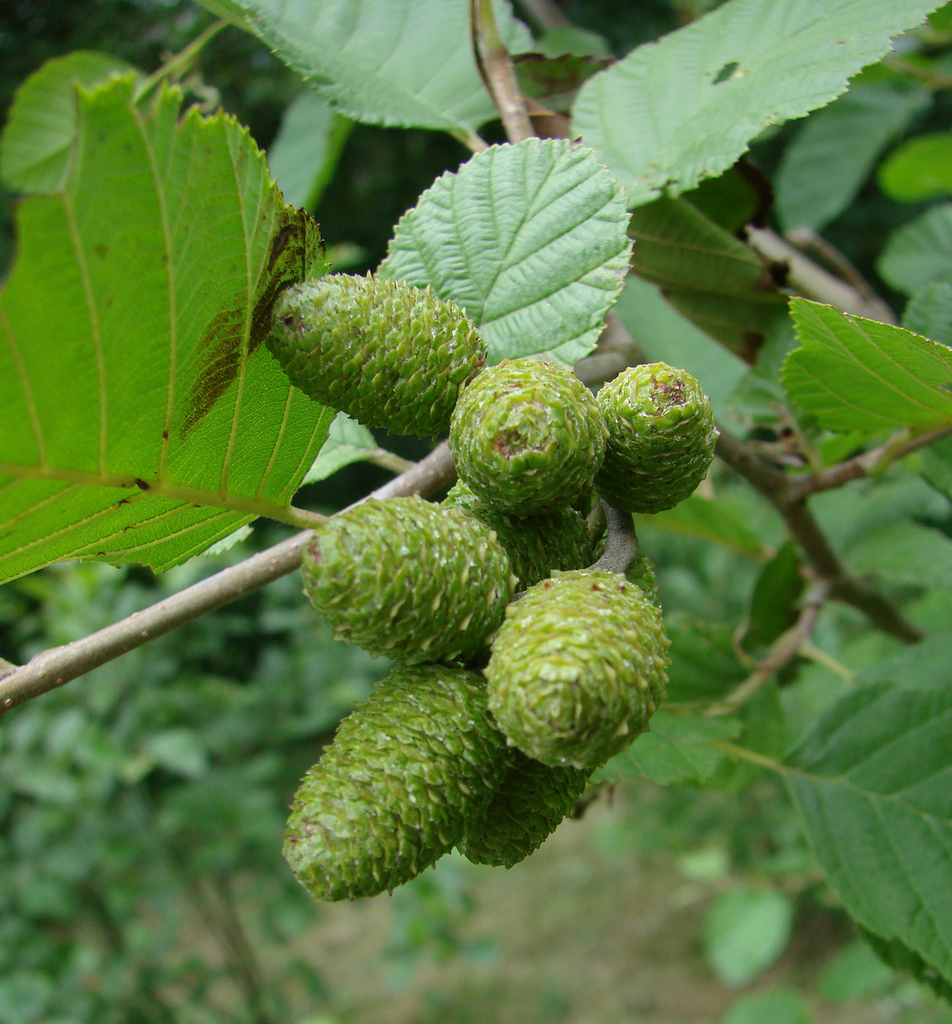
Alnus incana, commonly known as Grey Alder, is a medium-sized deciduous tree valued for its rapid growth and adaptability to various conditions. It features smooth, greyish bark and serrated oval leaves, giving it an elegant appearance in natural landscapes or as part of windbreaks. It is ideal for the revegetation of riverbanks or wet areas, as well as in large gardens where a robust, low-maintenance tree is desired.
Native range
Northern and central Europe, and Northwest Asia
Care tips
Grey Alder thrives in full sun to partial shade and is highly tolerant of a wide range of soils, including poor and moist ones. It requires regular watering during its first few years to establish, but once mature, it is quite drought-resistant, though it prefers moist soils. A common mistake is planting it in spaces that are too small, as its considerable size requires ample room to develop fully. It does not require regular pruning, except for shaping or removing damaged branches.
How to save a dying Grey alder
- Warning signs
- Yellowish or brown, wilting leaves, premature leaf drop, cracked bark.
- First aid
- Ensure good drainage, water if soil is dry, protect from extreme heat and frost. Check for pests.
- What kills it
- Constant waterlogging, compacted soil, prolonged drought when young, lack of light.
- Can it be saved?
- Yes, if acted upon quickly. Requires moist but well-aerated soil conditions and adequate sun exposure.