Andalusian oak (Quercus canariensis)
Care, watering, light and tips for Andalusian oak on Floravia.
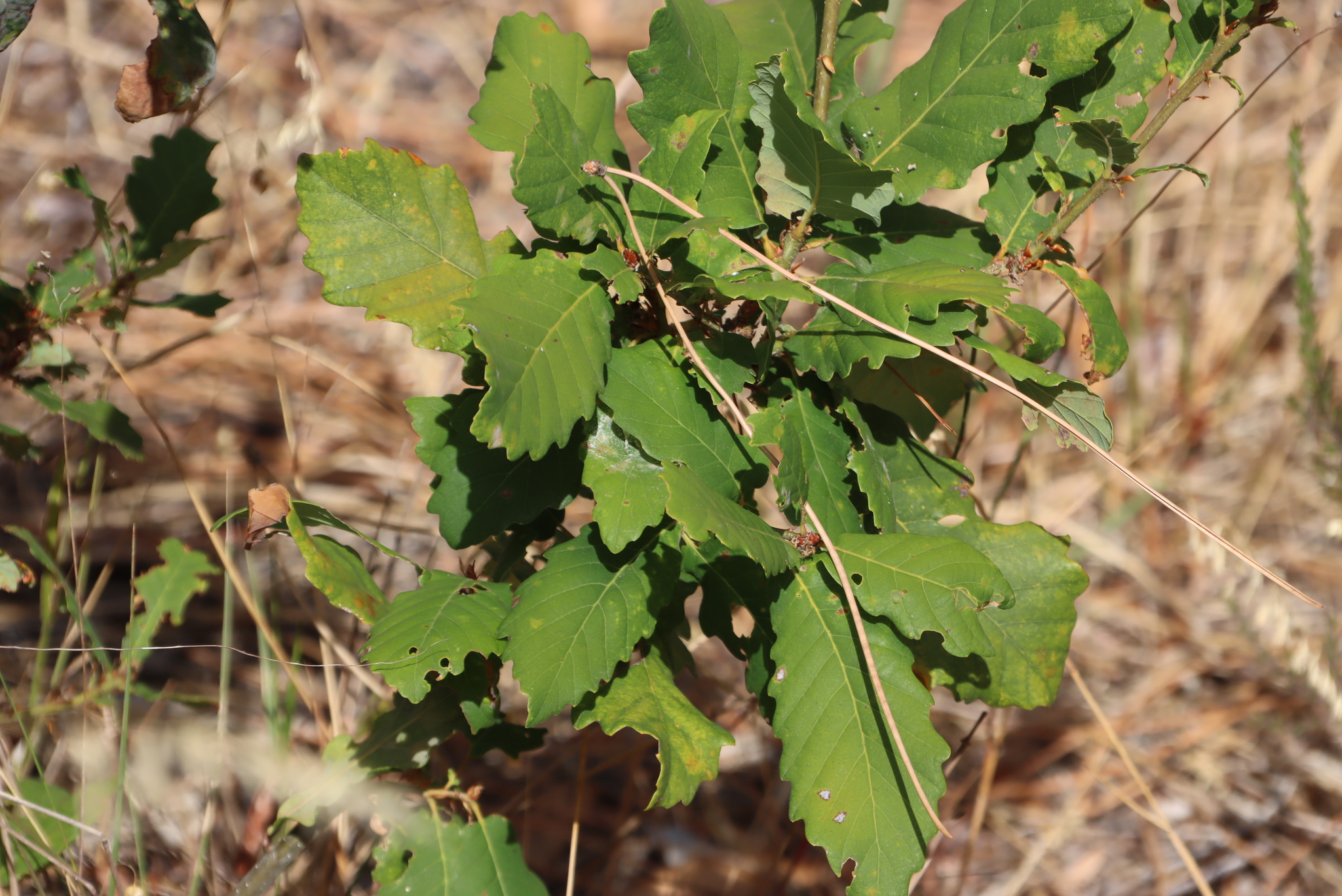
Quick facts
- Family: Fagaceae
- Difficulty: Demanding
- Watering: every 7 days
- Light: Partial shade
- Temperature: 10–30 °C
- Toxicity: Toxic to pets
About Andalusian oak
Quercus canariensis, also known as the Algerian Oak or Canary Island Oak, is a large deciduous tree valued for its dense, bright green foliage that turns golden in autumn. It features a robust trunk and a broad, rounded crown, making it an excellent choice as a shade tree in large gardens, parks, or avenues. Its majestic stature and longevity make it ideal for long-term landscaping projects.
Native range
Northwest Africa and the southwest Iberian Peninsula
Care tips
This oak prefers full sun exposure for optimal growth, although it tolerates some partial shade. It requires regular watering during its first few years, especially in dry periods, to establish a strong root system; once established, it is quite drought-tolerant. It thrives in deep, well-drained, slightly acidic to neutral soils. A common mistake is planting it in confined spaces, as it needs ample room to grow and develop its impressive canopy.
How to save a dying Andalusian oak
- Warning signs
- Wilted, yellowing leaves or dry, brittle edges. Premature leaf drop. General decline.
- First aid
- Check soil moisture. If dry, water deeply. If waterlogged, improve drainage. Protect young trees from intense direct sun. Check for pests.
- What kills it
- Prolonged drought in young stages or inadequate soil. Constant waterlogging causing root asphyxiation and rot.
- Can it be saved?
- Yes, if roots are not completely rotted and the main trunk shows no severe damage. Recovery can be slow.