Sweet chestnut (Castanea sativa)
Care, watering, light and tips for Sweet chestnut on Floravia.
Quick facts
- Family: Fagaceae
- Difficulty: Demanding
- Watering: every 7 days
- Light: Partial shade
- Temperature: 10–30 °C
About Sweet chestnut
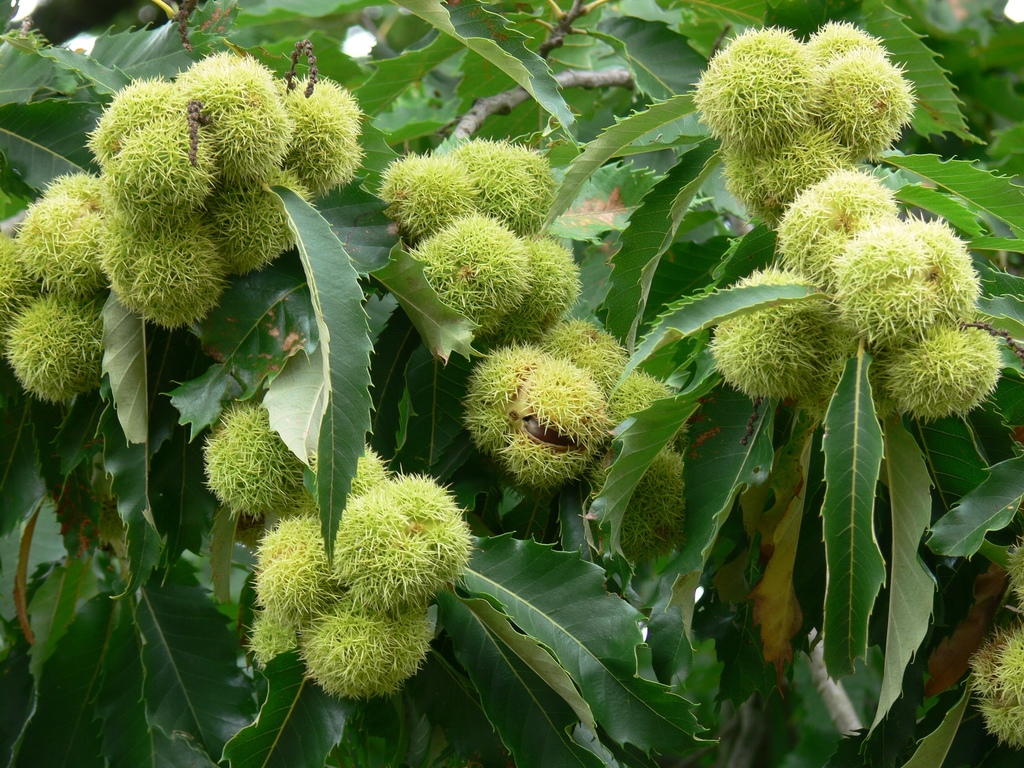
Castanea sativa, commonly known as the sweet chestnut or European chestnut, is a majestic, deciduous tree of large stature, famous for its edible fruits, the chestnuts. It features a dense, rounded canopy with large, serrated, bright green leaves. It is ideal for large gardens, parks, or as a shade tree on estates, where its splendor can fully develop.
Native range
Southern Europe and Asia Minor
Care tips
It requires full sun exposure for good fruiting and optimal development. Watering should be regular, especially in the first few years and during dry periods, ensuring the soil remains moist but not waterlogged. It prefers deep, fertile, well-drained, and slightly acidic soils. Avoid calcareous soils, as they can cause chlorosis and severely affect its growth.
How to save a dying Sweet chestnut
- Warning signs
- Yellow or brown leaves falling prematurely, cankers on bark, wilted or dry shoots.
- First aid
- Inspect root and trunk for fungi (ink disease). Ensure good soil drainage and aeration. Remove dead branches.
- What kills it
- Excessive moisture and compacted soils that promote 'ink disease' (Phytophthora cinnamomi), its main enemy.
- Can it be saved?
- Yes, if acted upon quickly. Improving drainage and applying specific fungicides can save it in early stages.