Cucumbertree magnolia (Magnolia acuminata)
Care, watering, light and tips for Cucumbertree magnolia on Floravia.
Quick facts
- Family: Magnoliaceae
- Difficulty: Moderate care
- Watering: every 7 days
- Light: Partial shade
- Temperature: 10–30 °C
About Cucumbertree magnolia
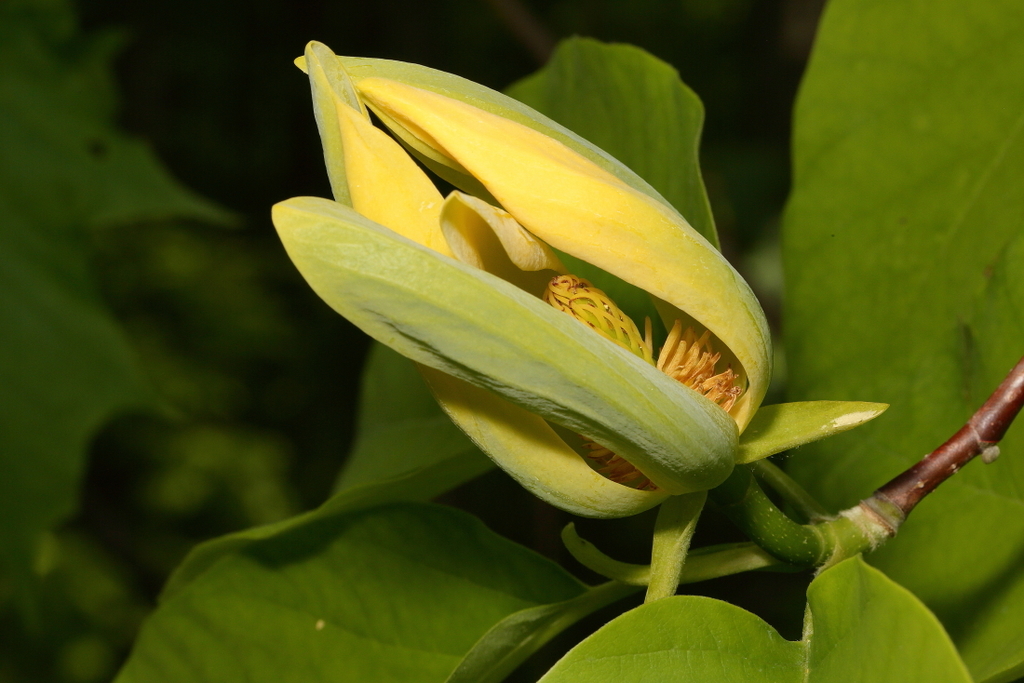
Magnolia acuminata, commonly known as Yellow Cucumbertree, is a deciduous tree native to North America, valued for its greenish-yellow, tulip-shaped flowers that emerge in spring. It grows into a large tree, reaching up to 30 meters in height, with a pyramidal or rounded crown and large, oval leaves. It is ideal as a shade tree in large parks and gardens, offering a majestic presence and unique seasonal interest.
Native range
Eastern North America, from southern Ontario (Canada) to the southeastern United States
Care tips
It prefers full sun to partial shade and deep, fertile, well-drained, slightly acidic soil. Watering should be regular during its early years and in dry periods, ensuring the substrate remains moist but not waterlogged. Avoid transplanting once established, as its roots are sensitive; choose its final location carefully. A common mistake is planting it in alkaline soils, which can lead to chlorosis.
How to save a dying Cucumbertree magnolia
- Warning signs
- Yellow or brown leaves falling prematurely, wilted young shoots, lack of flowering or stunted growth. This can indicate water stress or nutritional deficiencies.
- First aid
- Check soil drainage and moisture. If dry, water deeply. If waterlogged, improve drainage. Consider a balanced slow-release fertilizer.
- What kills it
- Poorly drained or compacted soil causing root rot, or lack of watering during dry periods. Magnolia acuminata does not tolerate waterlogging.
- Can it be saved?
- Yes, if roots are not completely rotted or trunk severely damaged. Act quickly by correcting soil and watering schedule.