African milk tree (Euphorbia trigona)
Care, watering, light and tips for African milk tree on Floravia.
Quick facts
- Family: Euphorbiaceae
- Difficulty: Easy to care for
- Watering: every 14 days
- Light: Full sun
- Temperature: 10–38 °C
- Toxicity: Toxic to pets
About African milk tree
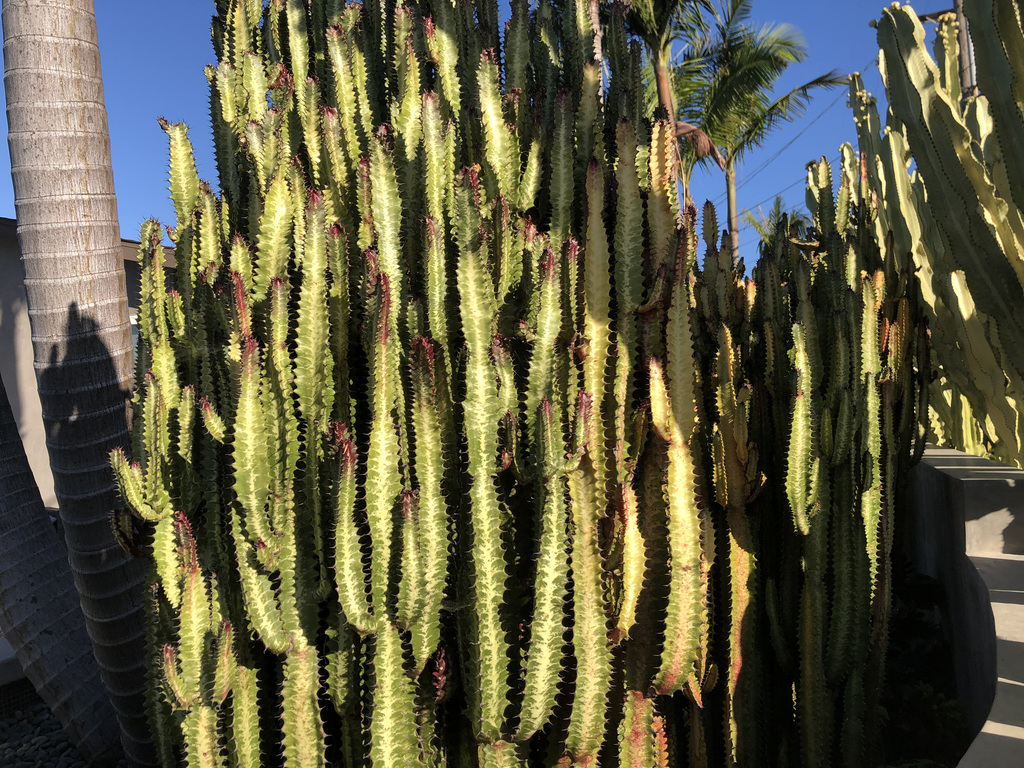
Euphorbia trigona, also known as the African Milk Tree, is a fast-growing, columnar succulent native to Africa. It is characterized by its dark green, three- or four-ribbed vertical stems that develop small leaves along their crests and short spines. This plant is ideal for adding an architectural and exotic touch to bright interiors or gardens in warm, dry climates.
Native range
West and Central Africa (primarily Gabon, Cameroon, Congo)
Care tips
It requires direct or very bright sunlight for at least 4-6 hours a day to maintain its compact growth and prevent etiolation. Watering should be moderate; allow the substrate to dry out completely between waterings, reducing frequency in winter. Use a well-draining substrate, specifically formulated for cacti and succulents. A common mistake is overwatering, which can lead to root and stem rot.
How to save a dying African milk tree
- Warning signs
- Soft or wrinkled stems, yellowing at base, leaf drop. Soft or foul-smelling roots.
- First aid
- Remove from pot, inspect roots. Cut soft/black parts with clean knife. Let dry 2-3 days. Replant in dry, well-draining soil.
- What kills it
- Overwatering, especially in winter or low light. Also extreme cold and moisture-retentive substrates.
- Can it be saved?
- Yes, often recoverable if acted upon quickly. The key is correcting watering and ensuring good drainage.