Sea spurge (Euphorbia paralias)
Care, watering, light and tips for Sea spurge on Floravia.
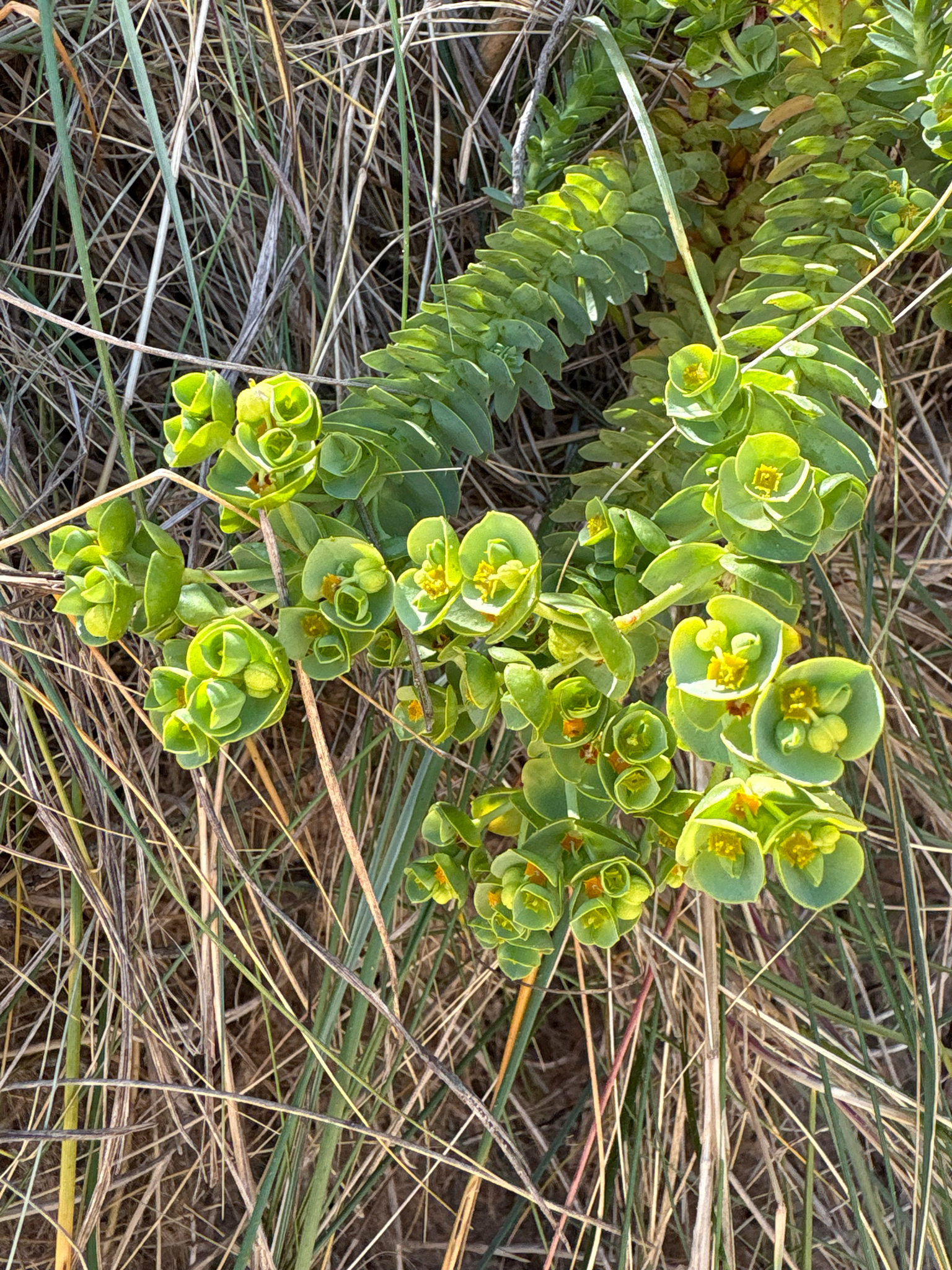
Quick facts
- Family: Euphorbiaceae
- Difficulty: Easy to care for
- Watering: every 14 days
- Light: Full sun
- Temperature: 10–38 °C
- Toxicity: Toxic to pets
About Sea spurge
Euphorbia paralias, commonly known as sea spurge or dune spurge, is a perennial succulent native to European and North African coastlines. It is characterized by its erect, branching stems, which can reach up to 70 cm in height, and its fleshy, bluish-green leaves arranged spirally along the stem. It is ideal for coastal gardens, rockeries, or as a low-maintenance plant in areas exposed to sun and wind.
Native range
Coasts of Europe, North Africa, and Western Asia
Care tips
This euphorbia thrives in full sun and tolerates direct wind exposure and salinity. It requires very well-draining soil, preferably sandy or gravelly, as waterlogging is its main enemy. Watering should be sparse, allowing the substrate to dry out completely between waterings, especially in winter. A common mistake to avoid is overwatering, which can lead to root rot.
How to save a dying Sea spurge
- Warning signs
- Soft or wrinkled stems, yellowing and falling leaves, darkened stem base.
- First aid
- Remove damaged leaves and stems. Check roots: if rotten, cut and repot in dry substrate. Increase ventilation.
- What kills it
- Overwatering, especially in winter or low light. Cannot tolerate waterlogging.
- Can it be saved?
- Yes, if rot hasn't reached the main stem. It's resilient if excess humidity is corrected.