Castor bean (Ricinus communis)
Care, watering, light and tips for Castor bean on Floravia.
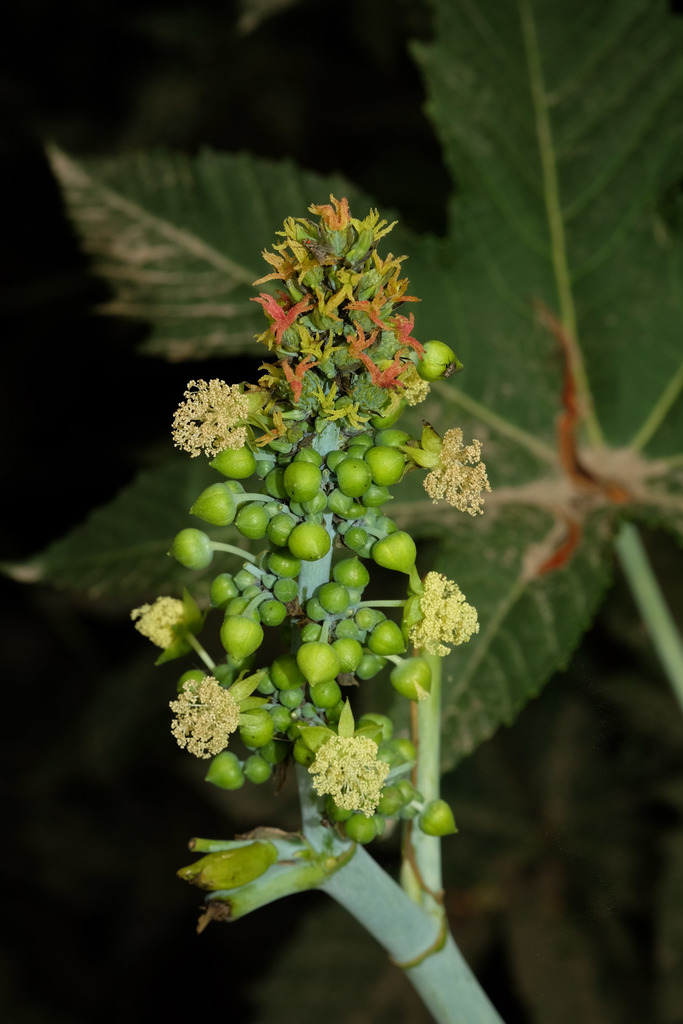
Quick facts
- Family: Euphorbiaceae
- Difficulty: Easy to care for
- Watering: every 3 days
- Light: Full sun
- Temperature: 10–38 °C
- Toxicity: Toxic to pets
About Castor bean
Ricinus communis, commonly known as Castor Bean or Castor Oil Plant, is a fast-growing annual or perennial plant, valued for its exotic foliage and striking seeds. Its large, palmate leaves, often in shades of red or purple, give it a tropical appearance that looks spectacular as a focal point in large gardens or as an accent plant in big pots.
Native range
Africa and Asia
Care tips
It requires full sun exposure for optimal growth and intense leaf coloration. Watering should be regular, keeping the substrate moist but not waterlogged, especially during dry periods. It prefers rich, well-drained, and slightly acidic soils. A common mistake is underestimating its toxicity; all parts of the plant, especially the seeds, are poisonous if ingested, so it must be handled with caution, especially around children and pets.
How to save a dying Castor bean
- Warning signs
- Yellow or wilting leaves, soft or drooping stems, stunted growth.
- First aid
- Check drainage and moisture level. If potted, ensure it's not waterlogged. If outdoors, protect from extreme cold or scorching sun. Consider repotting if substrate is depleted.
- What kills it
- Overwatering leading to root rot, or exposure to freezing temperatures. Also, complete lack of light.
- Can it be saved?
- Yes! It's a resilient plant. Act quickly upon symptom detection and adjust growing conditions.