Manuka (Leptospermum scoparium)
Care, watering, light and tips for Manuka on Floravia.
Quick facts
- Family: Myrtaceae
- Difficulty: Moderate care
- Watering: every 3 days
- Light: Partial shade
- Temperature: 10–30 °C
About Manuka
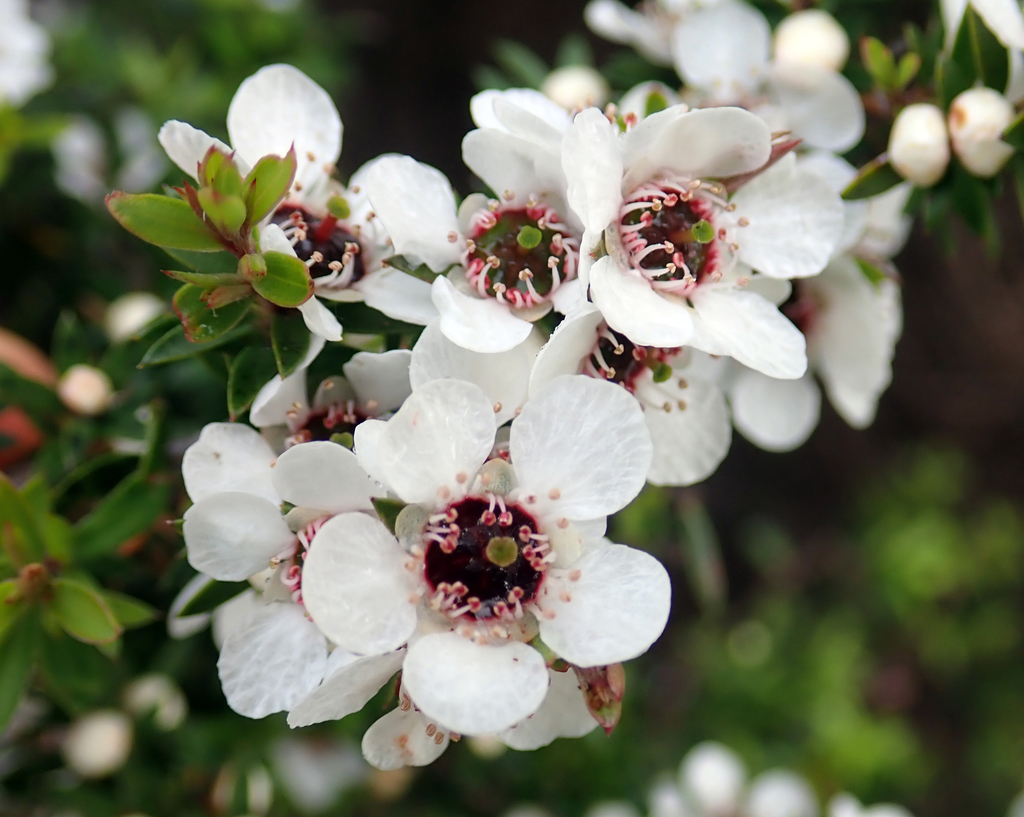
Leptospermum scoparium, commonly known as manuka or New Zealand tea tree, is an evergreen shrub or small tree native to New Zealand and southeastern Australia. It is characterized by its small, aromatic leaves and a profusion of star-shaped flowers ranging from white to deep pink, appearing predominantly in spring and early summer. It makes an excellent choice for low hedges, borders, or as a standalone specimen in Mediterranean or coastal-style gardens, adding color and texture.
Native range
Australia and New Zealand
Care tips
It prefers full sun exposure for abundant flowering and compact growth, though it tolerates some partial shade. It requires well-draining, slightly acidic, and sandy soil, and once established, it is quite drought-tolerant, although regular watering in summer will promote its blooming. It is crucial to avoid waterlogging, as its roots are susceptible to rot. A common mistake is planting it in heavy or clay soils without improving drainage.
How to save a dying Manuka
- Warning signs
- Yellowish or reddish leaves, leaf drop, dry and brittle stems, lack of flowering or wilting flowers.
- First aid
- Check drainage. If potted, repot into one with good drainage. If in ground, improve aeration. Water deeply, avoiding waterlogging.
- What kills it
- Extreme over or under-watering, heavy clay soil, severe frosts or prolonged droughts, lack of light.
- Can it be saved?
- Yes, if roots are not completely rotted or dry stems don't exceed 50%. Act quickly and patiently.