Java plum (Syzygium cumini)
Care, watering, light and tips for Java plum on Floravia.
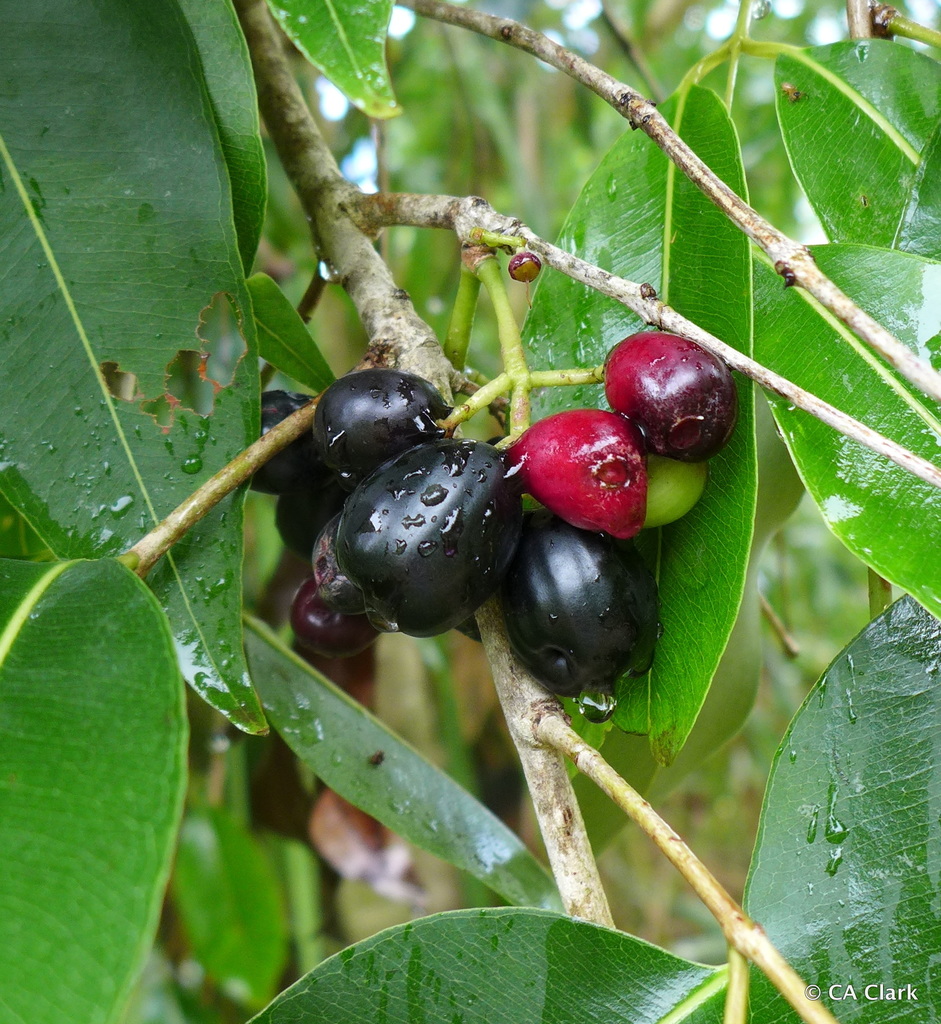
Quick facts
- Family: Myrtaceae
- Difficulty: Moderate care
- Watering: every 7 days
- Light: Partial shade
- Temperature: 10–30 °C
About Java plum
Syzygium cumini, commonly known as Java Plum or Jamun, is an evergreen tropical tree prized for its edible fruits and dense foliage. It features a broad, rounded canopy with glossy dark green leaves, making it an excellent shade tree for large gardens or a specimen fruit tree. Its small, fragrant flowers give way to oval berries that ripen from green to a dark purple-black, much appreciated for their sweet-sour flavor.
Native range
Indian Subcontinent and Southeast Asia
Care tips
It thrives in full sun exposure for optimal fruiting, although it tolerates some partial shade. Regular watering is needed during its early years and dry periods, but once established, it is quite drought-tolerant. The ideal substrate should be well-drained and rich in organic matter, accepting a wide range of soils from sandy to clayey. Avoid excessively alkaline soils, as this can affect nutrient absorption and the tree's overall health.
How to save a dying Java plum
- Warning signs
- Yellowish or brown leaves falling massively, no new shoots, compacted soil.
- First aid
- Check drainage and watering. Reduce direct sun if excessive. Fertilize with compost if soil is poor.
- What kills it
- Constant waterlogging, heavy soil without drainage. Also prolonged extreme drought.
- Can it be saved?
- Yes, if branches are still flexible and some green leaves remain. Act quickly with watering and soil changes.