Sakhalin raspberry (Rubus sachalinensis)
Care, watering, light and tips for Sakhalin raspberry on Floravia.
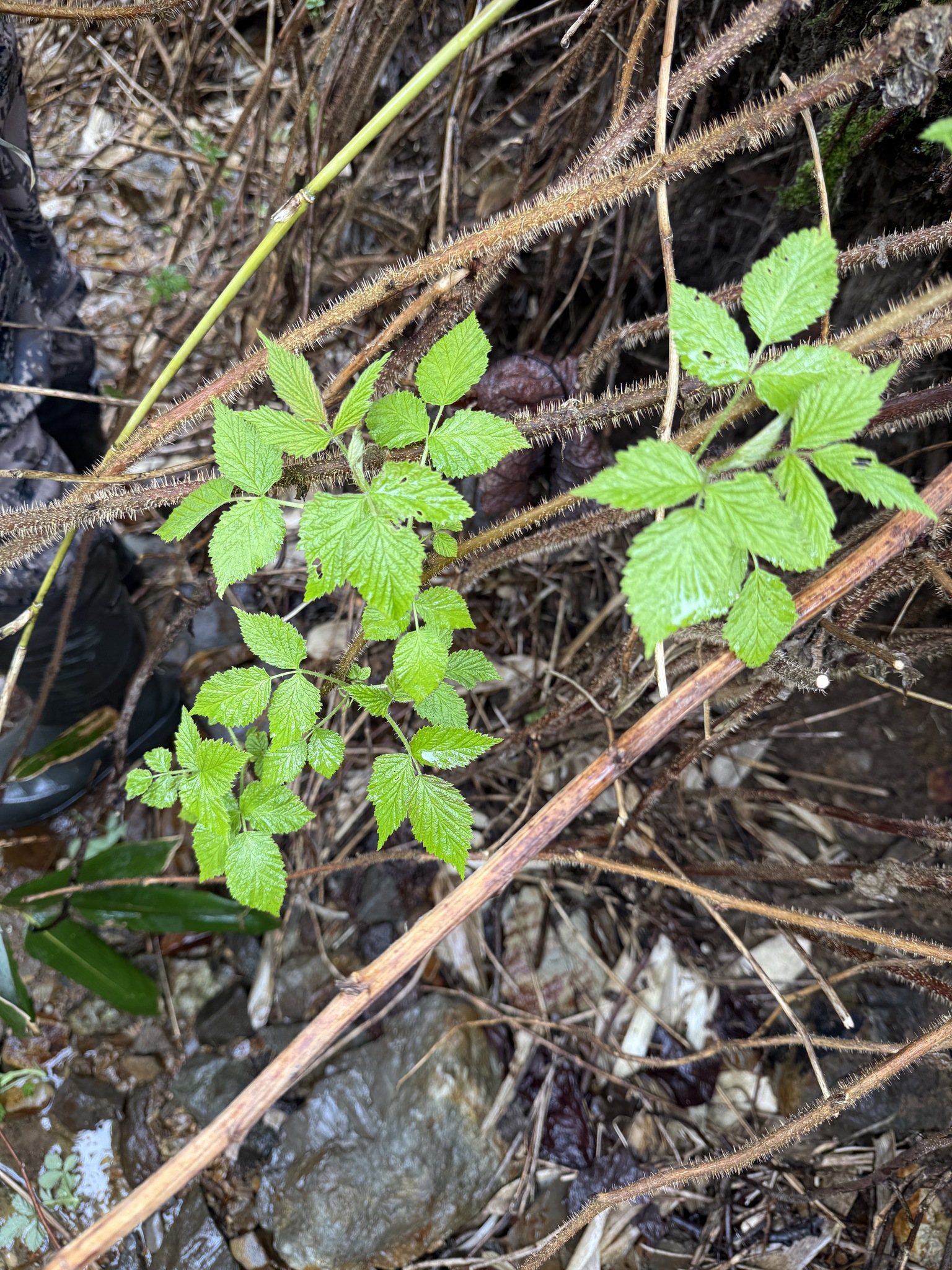
Quick facts
- Family: Rosaceae
- Difficulty: Easy to care for
- Watering: every 3 days
- Light: Full sun
- Temperature: 0–30 °C
About Sakhalin raspberry
Rubus sachalinensis, commonly known as Sakhalin Raspberry, is a medium-sized deciduous shrub valued for its edible red fruits and ornamental foliage. Its thorny stems and compound leaves give it a wild appearance, making it ideal for creating edible hedges or adding a rustic touch to edible gardens and woodland edges.
Native range
East Asia, specifically in Northeast Asia, including parts of Russia, China, Korea, and Japan.
Care tips
It prefers full sun to partial shade for optimal fruit production. Keep the soil consistently moist but well-drained, avoiding waterlogging which can lead to root rot. Use a substrate rich in organic matter and slightly acidic. A common mistake is failing to prune old canes after fruiting, which reduces the following year's yield.
How to save a dying Sakhalin raspberry
- Warning signs
- Yellow or brown, wilted leaves; small or no fruits; dry, brittle stems.
- First aid
- Check watering, ensure good drainage. Prune dry stems. Apply balanced fertilizer.
- What kills it
- Over/underwatering, heavy poorly drained soils, lack of annual pruning.
- Can it be saved?
- Yes, if the cause is corrected in time. Renewal pruning is key.