Himalayan blackberry (Rubus erythroclados)
Care, watering, light and tips for Himalayan blackberry on Floravia.
Quick facts
- Family: Rosaceae
- Difficulty: Easy to care for
- Watering: every 4 days
- Light: Full sun
- Temperature: 0–30 °C
About Himalayan blackberry
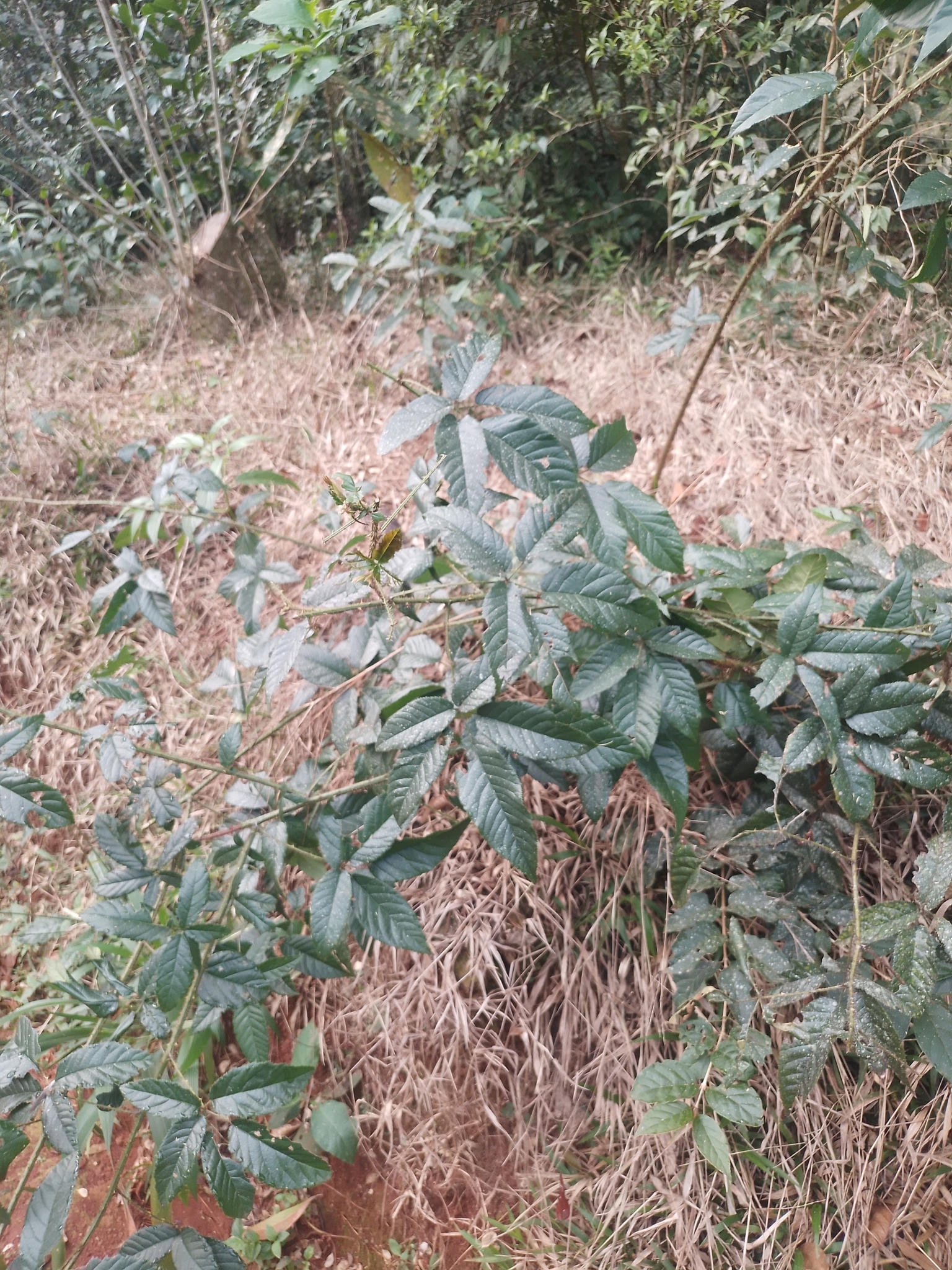
Rubus erythroclados, known as amora-do-mato, is a deciduous shrub from the Rosaceae family, prized for its edible, blackberry-like fruits. It features thorny stems and compound leaves, offering a rustic appeal in wild gardens or as a fruiting hedge. It is ideal for orchards and gardens seeking a natural and productive touch.
Native range
South America: Brazil (states of Paraná, Santa Catarina, and Rio Grande do Sul)
Care tips
It requires full sun exposure for optimal fruiting, though it tolerates partial shade. Watering should be regular, keeping the substrate moist but not waterlogged, especially during flowering and fruiting. It prefers well-drained, organically rich, and slightly acidic soils. A common mistake is the lack of renewal pruning, which reduces fruit production in subsequent years.
How to save a dying Himalayan blackberry
- Warning signs
- Yellowish or reddish, wilting leaves, dry or fungal stems. Small or absent fruits.
- First aid
- Check soil drainage and moisture. Prune dry stems. Apply balanced fertilizer and water deeply if dry.
- What kills it
- Overwatering that rots roots or nutrient deficiency. Also prolonged direct sun in hot climates.
- Can it be saved?
- Yes, if roots aren't completely rotted or dry stems don't exceed 50%. Act quickly.