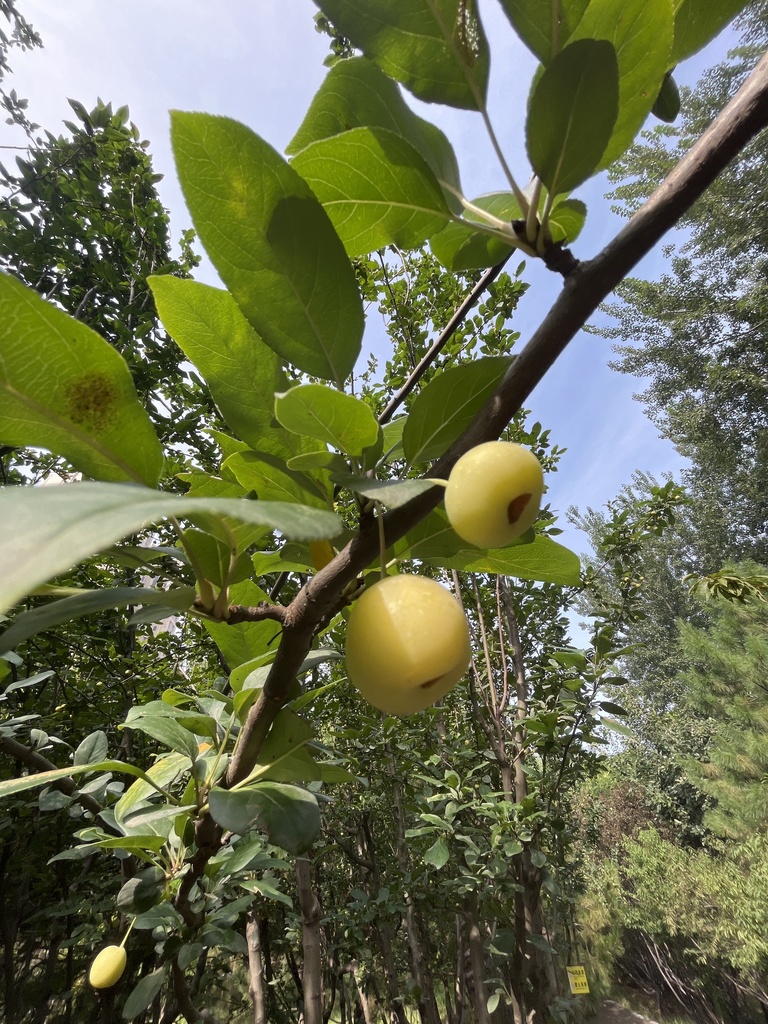
Chinese flowering crabapple (Malus spectabilis)
Care, watering, light and tips for Chinese flowering crabapple on Floravia.
Quick facts
- Family: Rosaceae
- Difficulty: Moderate care
- Watering: every 7 days
- Light: Full sun
- Temperature: 0–30 °C
- Toxicity: Toxic to pets
About Chinese flowering crabapple
Malus spectabilis, also known as Chinese Flowering Crabapple, is a deciduous tree belonging to the Rosaceae family, highly valued for its spectacular spring bloom. Its flowers, ranging from white to deep pink, densely cover the branches before the leaves emerge, creating an impressive visual appeal. It is ideal as a specimen tree in gardens, parks, or as part of an ornamental hedge, bringing color and vibrancy to the landscape.
Native range
China and Korea
Care tips
It thrives in full sun for abundant flowering, though it tolerates partial shade. It requires well-drained, fertile, and slightly acidic soil; avoid waterlogging as it is susceptible to fungal diseases. Water regularly during the first year and during dry periods, but allow the top layer of the substrate to dry out between waterings. A common mistake is over-pruning, which can reduce the following year's bloom.
How to save a dying Chinese flowering crabapple
- Warning signs
- Yellow or brown leaves falling prematurely, dry and brittle branches, lack of flowering, or small, deformed fruits.
- First aid
- Check watering (underwatering is common), prune dead branches with clean shears, protect from intense sun, and consider fungicide for leaf spots.
- What kills it
- Prolonged waterlogging rotting the roots or lack of water during drought. Neglecting sanitary pruning also kills it.
- Can it be saved?
- Yes, if roots aren't completely rotted and the main trunk still shows life. Recovery is slow but possible.