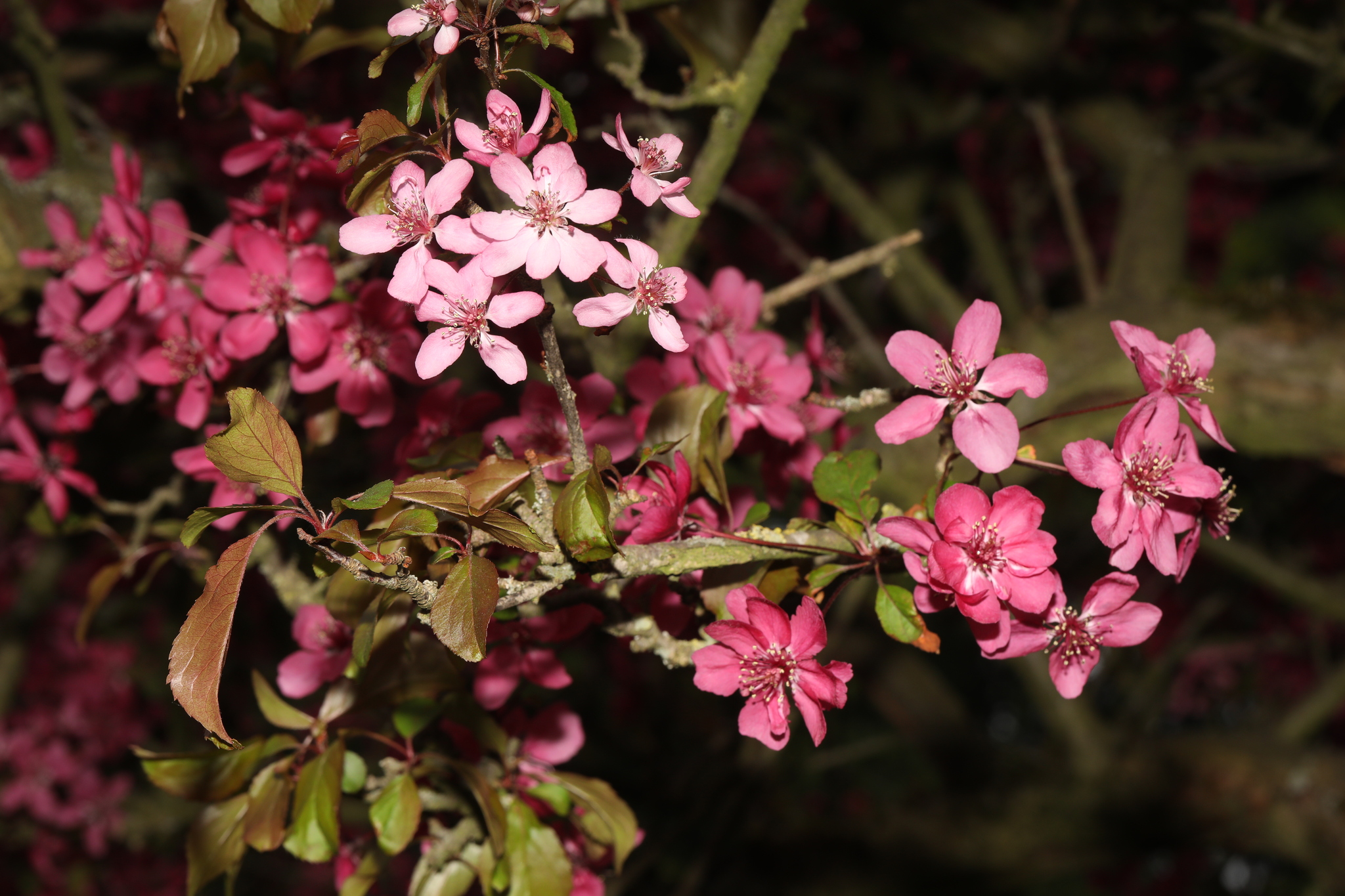
Purple crabapple (Malus purpurea)
Care, watering, light and tips for Purple crabapple on Floravia.
Quick facts
- Family: Rosaceae
- Difficulty: Moderate care
- Watering: every 7 days
- Light: Full sun
- Temperature: 0–30 °C
- Toxicity: Toxic to pets
About Purple crabapple
Malus purpurea, commonly known as purple crabapple, is a medium-sized ornamental tree renowned for its spectacular spring bloom of deep pink to purple flowers and foliage that emerges in reddish hues. Its small, decorative crabapples persist into autumn, adding visual interest. It is ideal as a focal tree in gardens, parks, or avenues, providing a vibrant splash of color.
Native range
Horticultural hybrid, it does not have a natural native distribution.
Care tips
It requires full sun exposure for abundant flowering and good foliage development. Watering should be regular during the first few years and in dry periods, avoiding waterlogging; once established, it is quite drought-tolerant. It prefers well-drained, fertile, and slightly acidic soils. A common mistake is excessive or incorrect timing of pruning, which can reduce the following year's bloom.
How to save a dying Purple crabapple
- Warning signs
- Wilted, yellowing or spotted leaves, premature flower/fruit drop, cracked bark.
- First aid
- Check watering (not waterlogged or dry), look for pests (aphids, spider mites), prune dead/diseased branches.
- What kills it
- Over/underwatering, heavy soils with poor drainage, lack of direct sunlight.
- Can it be saved?
- Yes, if you act quickly. Good drainage and balanced watering are key to recovery.