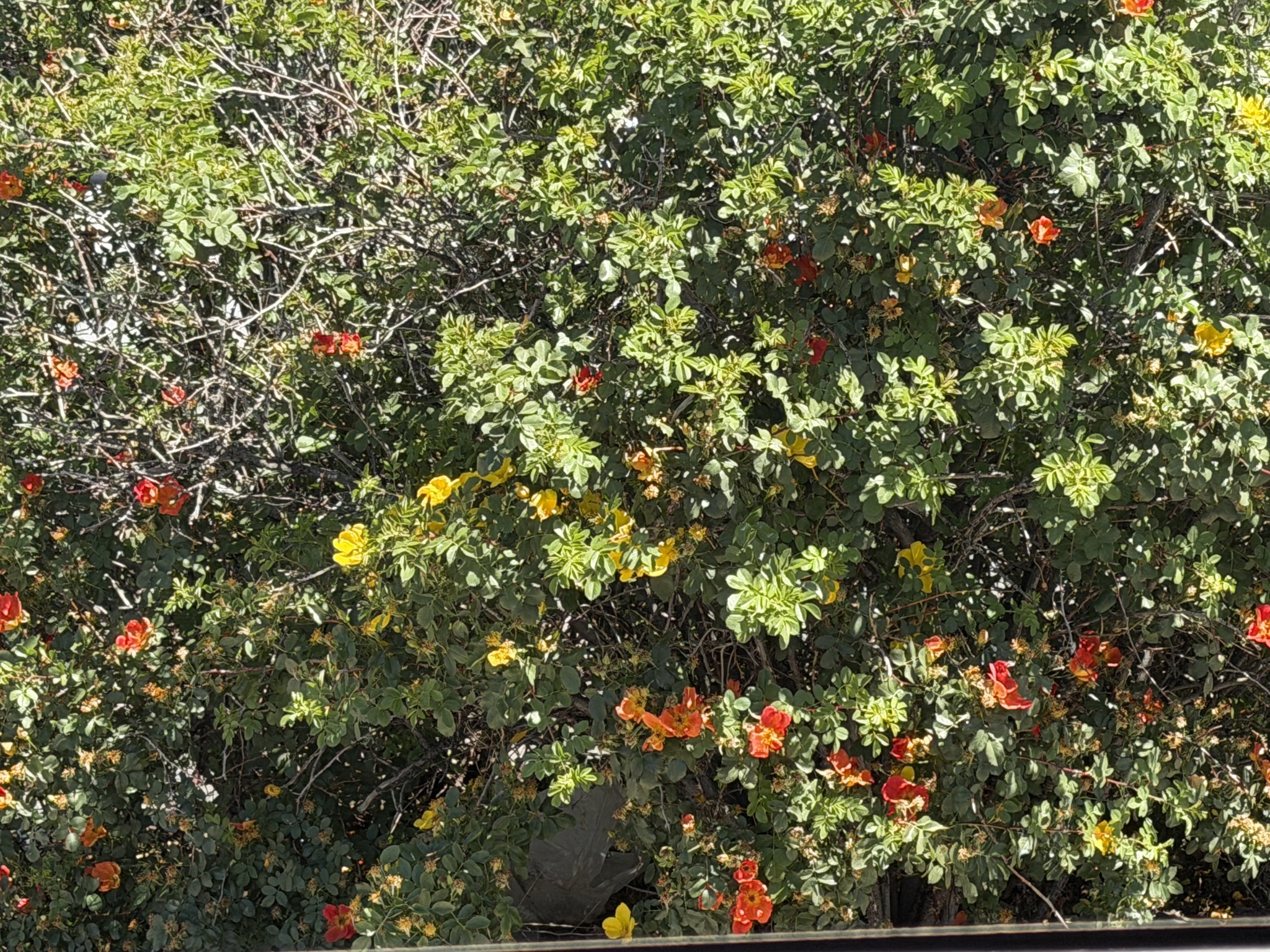
Austrian briar (Rosa foetida)
Care, watering, light and tips for Austrian briar on Floravia.
Quick facts
- Family: Rosaceae
- Difficulty: Moderate care
- Watering: every 7 days
- Light: Full sun
- Temperature: 0–30 °C
About Austrian briar
Rosa foetida, also known as the Austrian Brier or Persian Yellow Rose, is a wild rose species native to the mountain slopes of the Caucasus. It is characterized by its intense yellow flowers, often with a reddish center, and an unusual scent that some describe as sweet and others as slightly unpleasant, hence its name. It is ideal for rustic gardens, rockeries, or as a low hedge, providing a vibrant splash of color and a distinctive olfactory interest.
Native range
Central Asia and Southwest Asia
Care tips
It requires full sun for abundant flowering and optimal development, at least 6 hours daily. Watering should be moderate, allowing the substrate to dry slightly between waterings, as it is susceptible to overwatering. It prefers well-drained soils, rich in organic matter, and with a neutral to slightly alkaline pH. A common mistake is over-pruning; Rosa foetida blooms on old wood, so only dead or diseased branches should be removed after flowering.
How to save a dying Austrian briar
- Warning signs
- Yellowing or browning leaves falling off, buds not opening or rotting, soft stems. Black spot fungus is common.
- First aid
- Remove diseased flowers and leaves. Check drainage and soil moisture. Apply fungicide for black spot. Prune dry stems.
- What kills it
- Overwatering (promotes fungi) or poor air circulation. Also intense direct sun without acclimatization.
- Can it be saved?
- Yes, if roots aren't completely rotted and some green stems remain. Act quickly with pruning and treatment.